
 Released in 2022
- Supports 130+ native chains
- DEX aggregator draws on 100+ liquidity pools
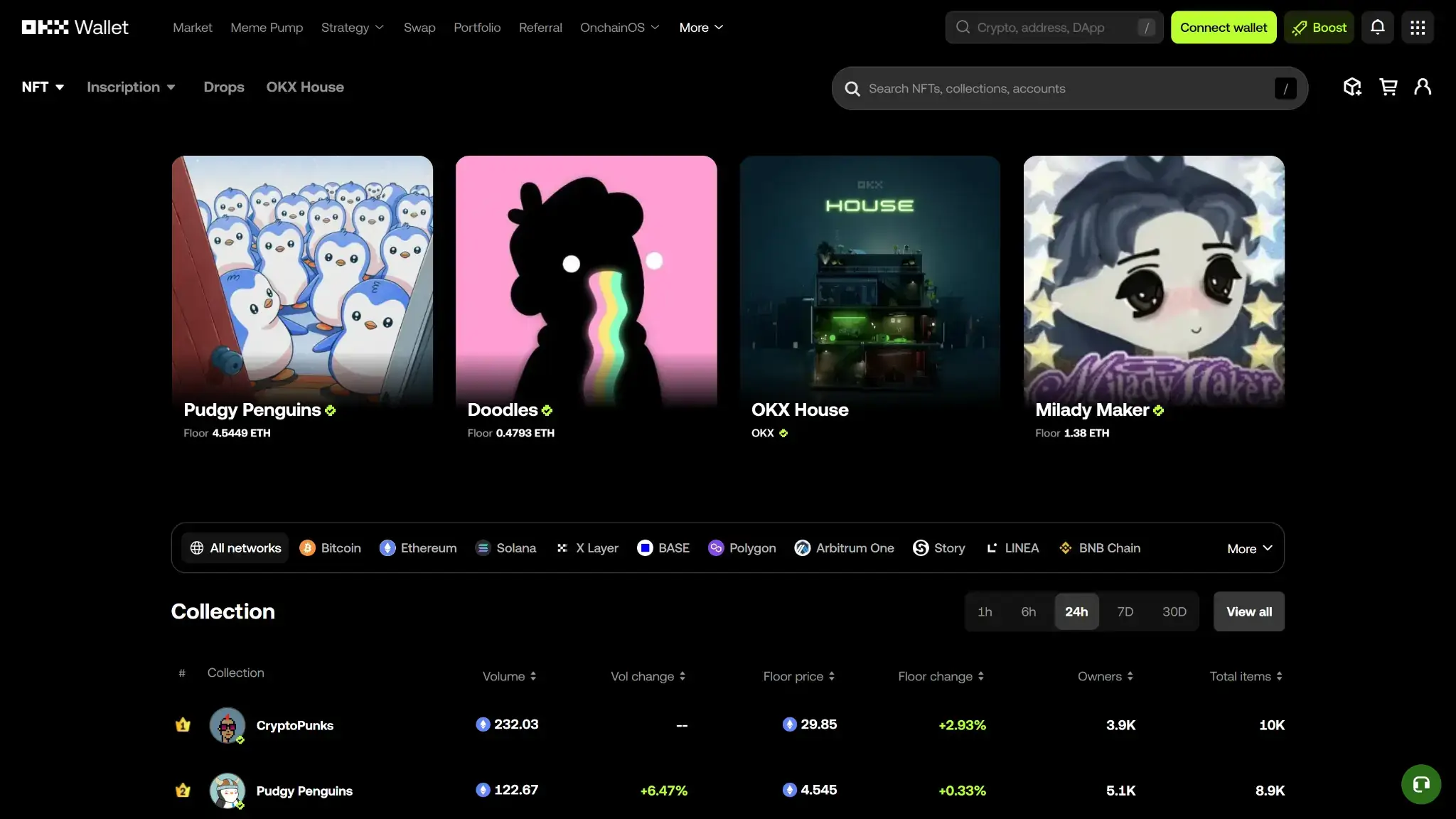
- Create and trade NFTs inside the wallet
OKX Wallet Overview
- Crypto Wallet Name
- OKX Wallet
- Release Date
- 2022
- Wallet Type
- Multi-platform wallet
- Custodial Status
- Non-custodial
- Built-in Swaps
- Yes
- Open-source
- Partially open-source
- Fiat On-ramp
- Yes
Additional details
- Supported Blockchains
- Bitcoin, Ethereum, BNB Smart Chain, Avalanche, Tron, Arbitrum, Base, Optimism, Polygon, Solana
- Token Standards
- Native coin, ERC-20, BEP-20, SPL, TRC-20
- Platforms
- iOS, Android, Browser extension
- Hardware Wallet Support
- Yes
- Staking Support
- Limited
- Supported Hardware Wallets
- Ledger, Trezor
- Hardware Connection Methods
- USB
OKX Wallet Screenshots
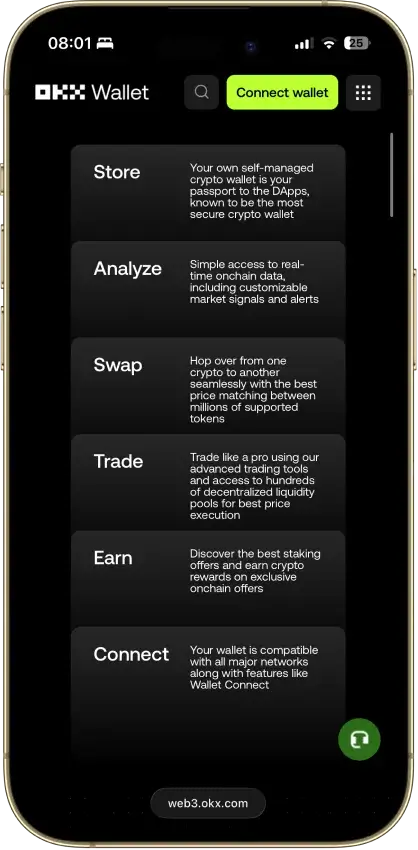
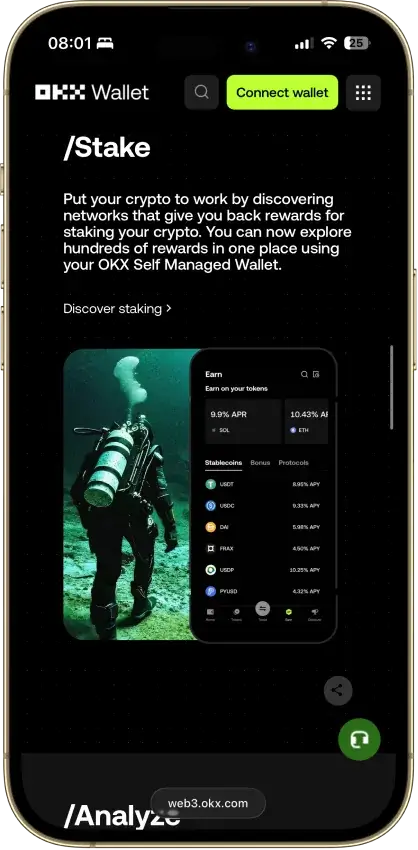
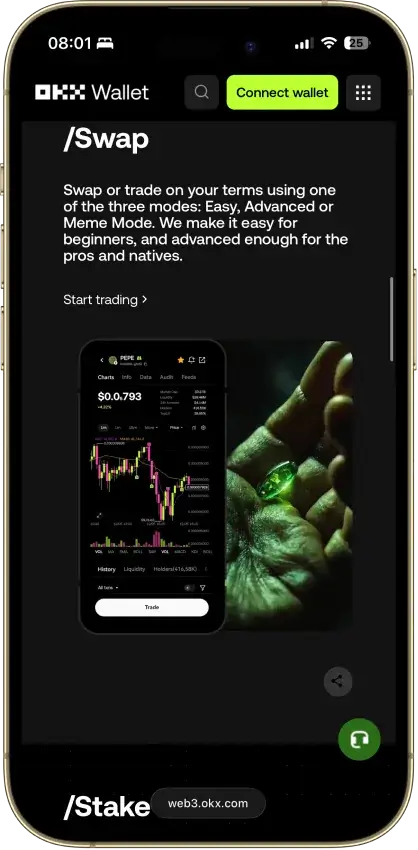
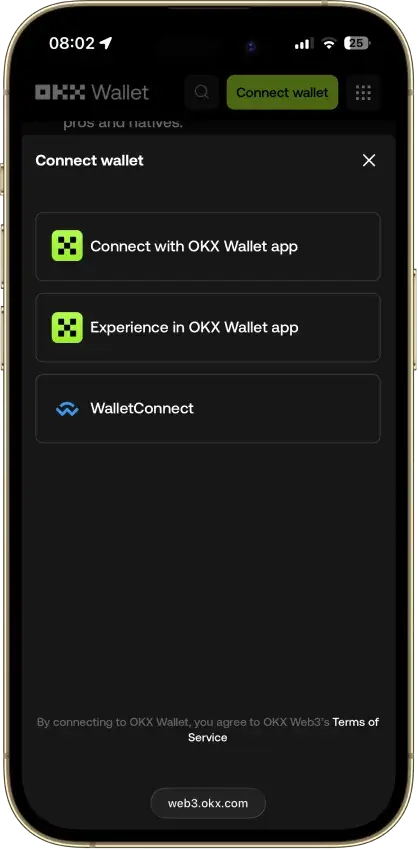
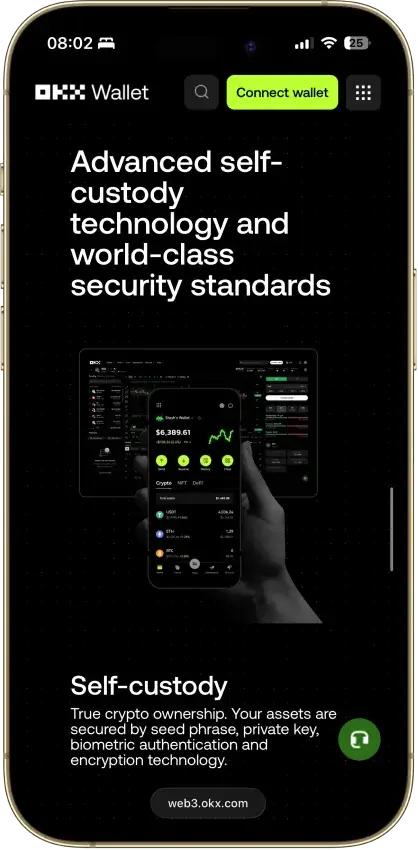
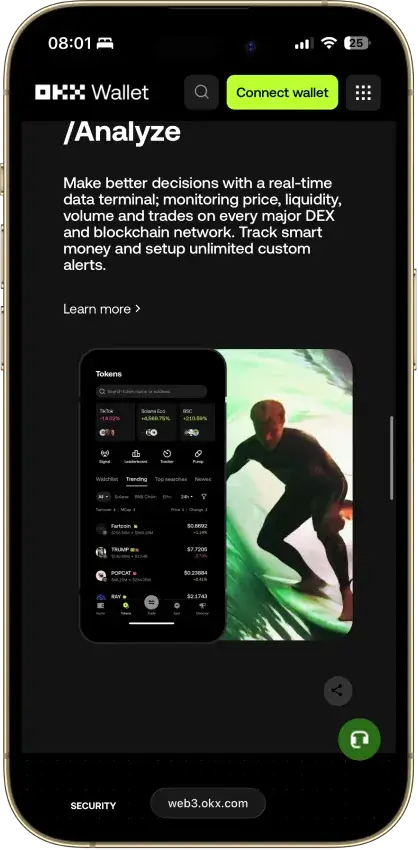
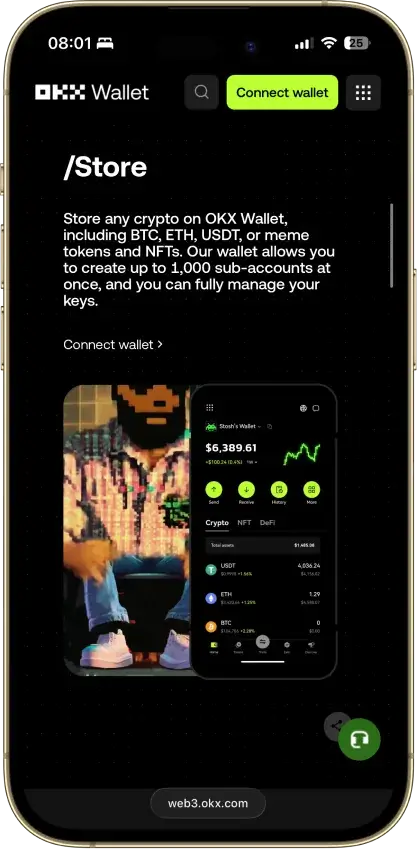

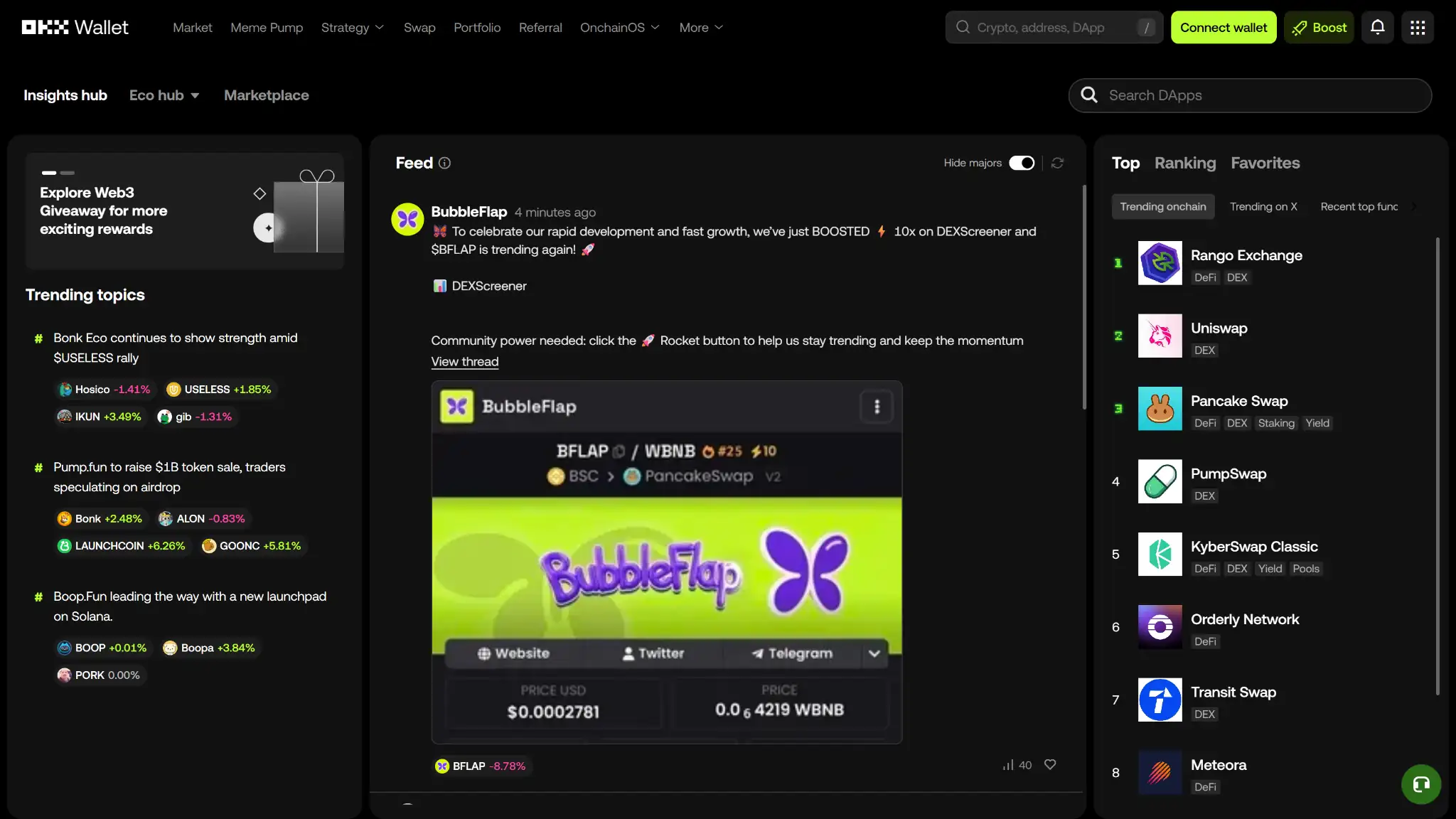
Screenshot 1 of 8
OKX Wallet Pros and Cons
Pros
- Pre-approval scam and phishing alerts
- Built-in token-approval revoke tool
- CertiK and SlowMist audits plus bug bounty
- Cross-chain bridging in one interface
- Earn staking stays non-custodial
Cons
- $505M DOJ guilty plea, consultant to 2027
- DEX service suspended in March 2025
- Keyless mode hands OKX one key share
- Client code is not fully open source
Who OKX Wallet Is Best For — and Who Should Skip It
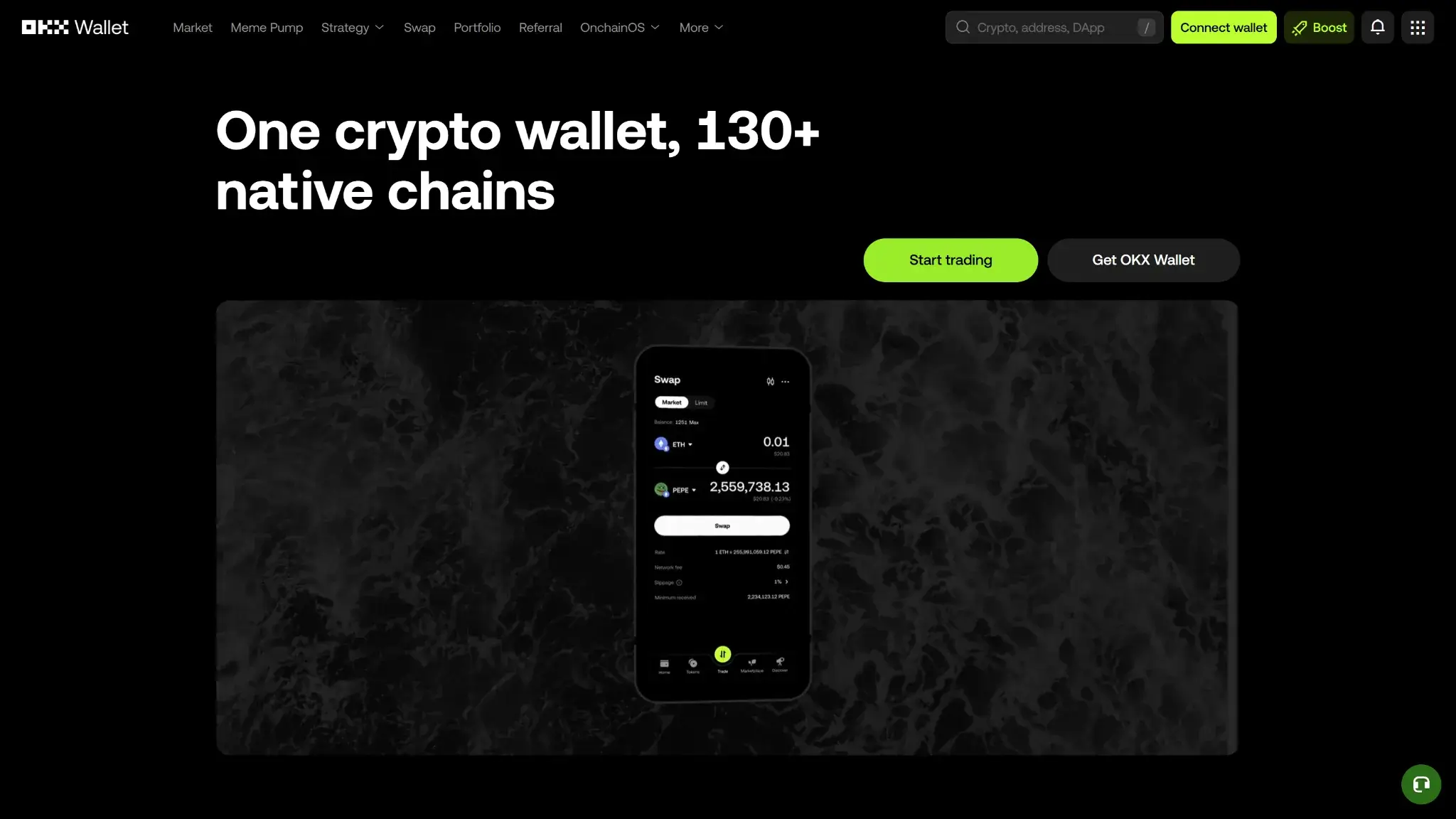
OKX Wallet combines multichain accounts and swap routing in a closed-source client. It is most useful when you need several supported networks in one interface.
- It fits DeFi users active on many chains and traders who want aggregated swap routing without leaving the wallet. OKX exchange customers get self-custody in the same app, and hardware wallet owners can pair their devices with it.
- It does not suit users who require a fully open-source client or want to avoid dependence on OKX's online services. The company's 2025 legal and service history may also rule it out for some users.
What Is OKX Wallet and How Does It Work?
OKX Web3 Wallet is separate from an OKX exchange account. Its software agreement names OKX Technology Inc. as the wallet software provider. The OKX exchange business was founded by Star Xu and includes Seychelles-based Aux Cayes FinTech Co. Ltd. The exchange holds customer funds and requires KYC. Standard seed-phrase wallet accounts generate keys and sign transactions on your device, with no identity check for standard use. It runs as a browser extension and as mobile and desktop apps, and it also lives inside the main OKX app for exchange users who want both.
In February 2025, OKX pleaded guilty in the US to operating an unlicensed money-transmitting business and paid roughly $505 million. The exchange re-entered the US market in April 2025 with a FinCEN-registered entity and reported money-transmitter licenses in 40+ states. The self-custody wallet was also included in the relaunch, but those registrations concern the exchange business. Wallet features remain subject to their own service and regional restrictions.
Security and Custody
In standard seed-phrase mode, OKX Wallet is non-custodial, with a seed phrase and keys that are generated and stored on your device. Transactions are signed locally, and the same accounts restore in any compatible wallet. OKX cannot move your funds and cannot recover your seed if you lose it.
New keyless-wallet creation ended on May 23, 2025. Existing keyless accounts remain usable through the OKX App, following suspension of extension support on April 7, 2025. Keyless mode uses MPC with three key shares: one on OKX's server, one on your device and one in your iCloud or Google Drive backup. Two shares are required to sign, and OKX cannot reconstruct the key or spend with its share alone. Emergency escape uses the device and cloud shares to export conventional wallet credentials without OKX approval. This exit invalidates the original keyless wallet and cannot be reversed.
Standard accounts can instead use a password-protected cloud backup of the seed. Its backup password is separate from the wallet password. This stores a recoverable seed backup, rather than one MPC share. Losing that password prevents restoration from the cloud backup, so keep another usable recovery route.
The January 29, 2026 software agreement separately describes a TEE wallet, which creates and uses keys in a third-party trusted execution environment and supports a cached backup on the user's device. TEE access and signing depend on that provider's infrastructure. This is a different model from standard local signing and legacy MPC. The agreement does not establish which TEE options are currently available to every user.
OKX provides CertiK and SlowMist security reports. SlowMist assessed key management in the mobile apps and the browser extension from March 2 to March 20, 2026, covering key handling from generation to deletion. A separate audit of the MPC implementation on Android came back low risk, with nine suggestions plus one low-severity finding. A public bug bounty runs on HackenProof. The client also flags phishing and malicious URLs and explains in plain language what a contract approval grants. A built-in tool lets you revoke token approvals.
None of these reports replaces open code, since OKX shares only some smart-contract and SDK repositories and outsiders cannot audit the full wallet client end to end. You are trusting the auditors' reports and OKX's build process instead of reading the code yourself.
Track Record
The following events concern the exchange operator and its Web3 services. Standard self-custody accounts do not give OKX custody of their funds.
- On February 24, 2025, Aux Cayes FinTech Co. Ltd pleaded guilty to operating an unlicensed money-transmitting business in the US. The DOJ announcement describes approximately $505 million in penalties and an external compliance consultant retained through February 2027. The case concerned that entity's exchange business.
- In March 2025, OKX temporarily suspended its Web3 DEX aggregator. In its service update, OKX said it had detected attempts by Lazarus Group to misuse its DeFi services and was adding controls after consulting regulators. That statement does not establish how much stolen money moved through the service.
The guilty plea concerns the operator. The service suspension shows that access to swap routing can change even when users retain their keys. Neither event establishes the security of the wallet client.
Supported Assets, Networks, and Compatibility
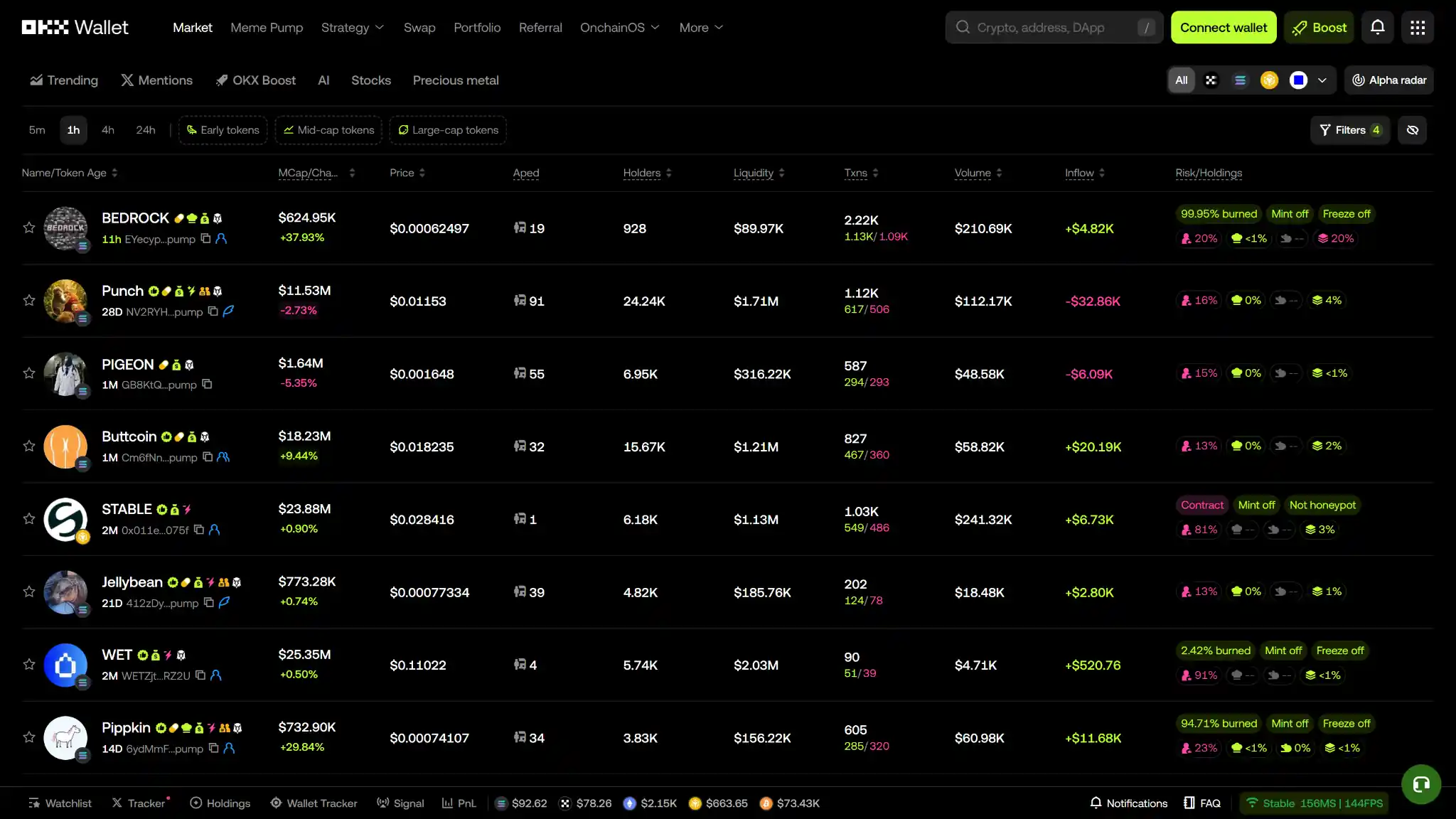
OKX Wallet supports 130+ native chains. Coverage reaches Bitcoin and Solana as well as the EVM networks. Tron and the Cosmos-ecosystem chains are supported too, along with a long tail of newer L1s and L2s. Token support follows each chain natively. NFT support includes creating and storing NFTs plus marketplace access, with feature depth varying by chain. Check support for each asset and network you use, since chain coverage does not mean every feature works on every chain.
Usability and Recovery
No KYC is required for standard self-custody use. Identity checks only appear when you touch exchange-linked features or the fiat on-ramp. Standard seed accounts can be restored across the extension and the mobile and desktop apps.
In standard mode, back up the seed phrase before you need to restore the wallet. If your standard account still opens in OKX Wallet, use its seed-viewing function to make a recovery backup before deleting the app or replacing the device. If you lose wallet access and have no usable seed or private-key backup, OKX cannot recover it. Its wallet FAQ explains how to view and back up the seed. For standard cloud backups, protect the separate backup password as well as the cloud account. OKX cannot retrieve that password for you. Existing keyless accounts instead need two of their three shares and are managed through the OKX App. Recovery after losing a phone depends on the cloud share and the OKX recovery process, so protect the linked Apple or Google account too. Emergency escape converts the account to conventional credentials and permanently ends use of the original keyless wallet.
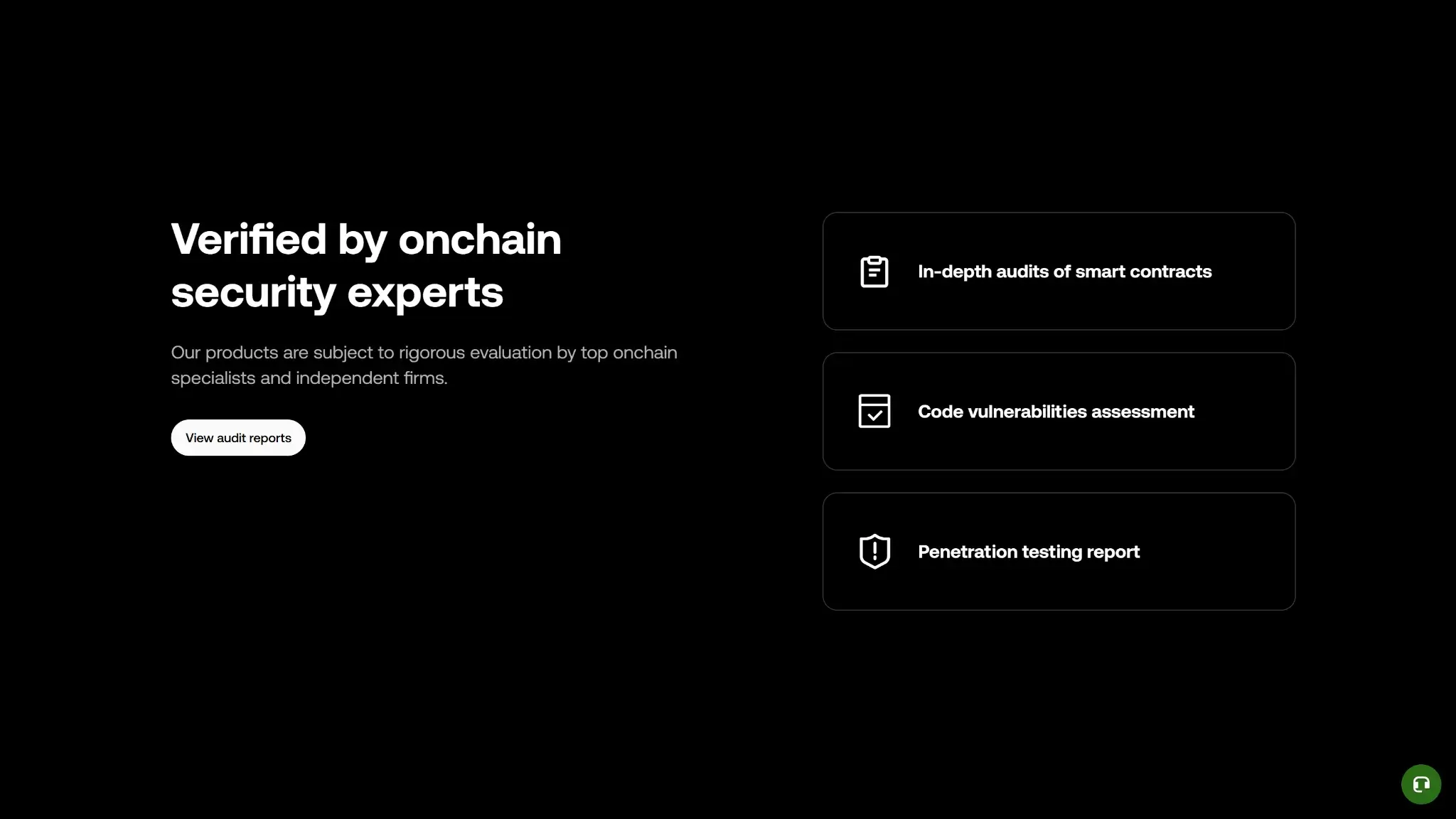
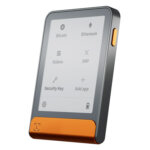
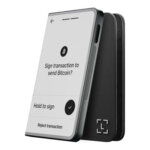
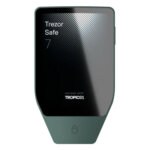
For larger balances, the wallet pairs with Keystone 3 and 3 Pro over USB or QR codes and also supports Ledger and Trezor devices. Pairing a hardware wallet keeps OKX Wallet as the interface while moving key storage and signing to a dedicated device.
OKX applies IP-based geo-blocking to its services. Other wallets can also depend on restricted service providers: MetaMask documents regional restrictions for its default Infura connection. OKX froze new wallet creation in certain markets during the March 2025 upgrade, so your access to the app depends partly on where OKX decides to operate.
Features
The DEX aggregator is the flagship feature, routing swaps across 100+ liquidity pools and major DEXs to find pricing. Its interface fee schedule ranges from 0% to 0.5%, depending on the asset pair. Network and pool fees are separate. Slippage is a change between the quoted and executed price, not an additional fee. The same interface also handles cross-chain routing and bridging.
Web3 Earn lists staking and DeFi opportunities inside the wallet. Rewards and withdrawal conditions depend on the underlying network or protocol. Self-custody does not remove smart-contract or protocol risk.
The fiat on-ramp hands you off to third-party partner providers whose fees vary by provider and payment method, and they differ between regions. Treat the quoted total as the full price and compare it against buying on an exchange and withdrawing.
Cost
The app is free on every platform, so your costs come from using it. On-chain transactions incur network fees. A swap can also incur a 0% to 0.5% interface fee and pool fees. Slippage can change the amount received. Cross-chain moves add bridge fees, and buying crypto with fiat in the wallet adds the on-ramp partner's fee. Compare the final amount received and all quoted charges across routes, especially when swapping frequently.
Comparison with Other Wallets
-


MetaMask
MetaMask combines EVM dApp access with native Bitcoin, Solana and TRON accounts. It offers hardware connections and optional linked-login recovery, with a 0.875% wallet swap fee.
-

Rabby Wallet
Rabby is an EVM wallet with transaction previews, portfolio tracking and a 0.25% standard swap fee. It supports hardware connections but not native Bitcoin or Solana accounts.
-

Trust Wallet
Trust Wallet combines multichain accounts with optional cloud backup and a separate SWIFT passkey wallet. Classic and SWIFT recovery differ, and the September network changes require checking continued access for affected assets.
OKX Wallet has a closed-source client, regional service restrictions and several possible swap charges. Its exchange operator also remains under the compliance-consultant agreement described above. If any of that rules it out for you, work through our current crypto wallet rankings, starting with these three.
- MetaMask suits users who want a wallet without an exchange parent. Its default network provider still has regional restrictions.
- Rabby Wallet suits active EVM DeFi users who want a flat 0.25% swap fee and pre-transaction risk checks.
- Trust Wallet suits mobile-first users who want broad multichain coverage in a simpler app.
OKX may fit better if its supported networks and swap routes cover the assets you use. Compare those requirements directly before choosing a wallet.
Crypto Wallets Pillar Scores
- Custody and key security 30% weight Who can authorize spending, protection of keys and signing, and independent access to every reviewed account type.9.5 / 10
- Security validation and track record 25% weight Independent security assessments, their coverage and findings, plus updates and the handling of known incidents.7.0 / 10
- Transaction safety and signing 20% weight Transaction details, signing warnings, scam checks, permission controls and the handling of unreadable requests.8.0 / 10
- Backup and recovery 10% weight Repeatable backup checks, complete restoration, recovery dependencies, costs and resilience after backup loss.8.0 / 10
- Usability, privacy and costs 10% weight Setup and everyday tasks, accessibility, support guides, data-sharing choices and device, service and transaction costs.8.0 / 10
- Assets, networks and compatibility 5% weight Asset and network support, devices, companion apps and connections needed for the uses covered in the review.8.0 / 10
Final Verdict
OKX Wallet suits users who need swaps and bridging across its 130+ supported chains. Phishing warnings, approval checks and a hardware-signer option help users inspect transactions, but cannot guarantee their safety. The client is closed source. OKX's operating entity pleaded guilty in the US in 2025, and its DEX aggregator was temporarily suspended that March. Those service and operator risks remain relevant when choosing the wallet.
CryptoSlate may earn a commission when you use partner links, at no extra cost to you. Our reviews, ratings, and editorial decisions remain independent of advertisers. Read How CryptoSlate Makes Money for funding details.