The best brokerage accounts combine the investments you need with costs you can understand before you deposit. We compare nine US brokers across taxable investing, retirement accounts and active trading, including what happens to money left uninvested. A brokerage account lets you buy and hold investments, but its cash balance can follow different rules from a bank account.
Top Brokerage Accounts
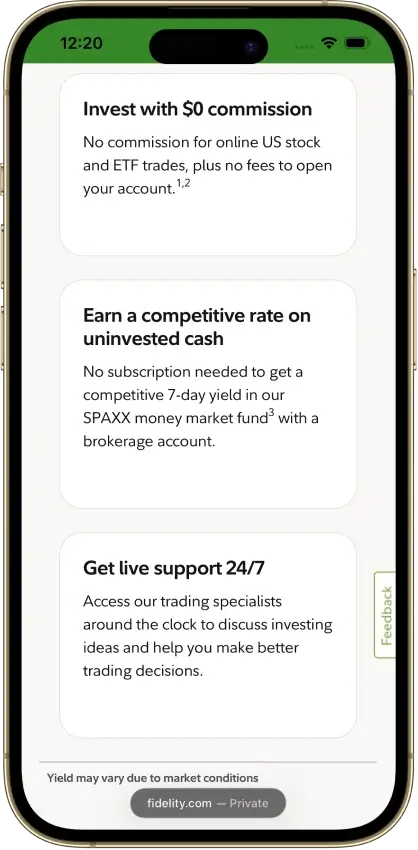
 Fidelity
- Idle cash
- Core choice sets the yield
- Spot crypto
- Separate account; transfers
- Stocks from 25 foreign markets, traded directly
- Spot crypto with on-chain withdrawals
- Every IRA type, plus a linked Crypto IRA
 Interactive Brokers
- Idle cash
- First $10,000 earns 0%
- Spot crypto
- Via Zero Hash or Paxos
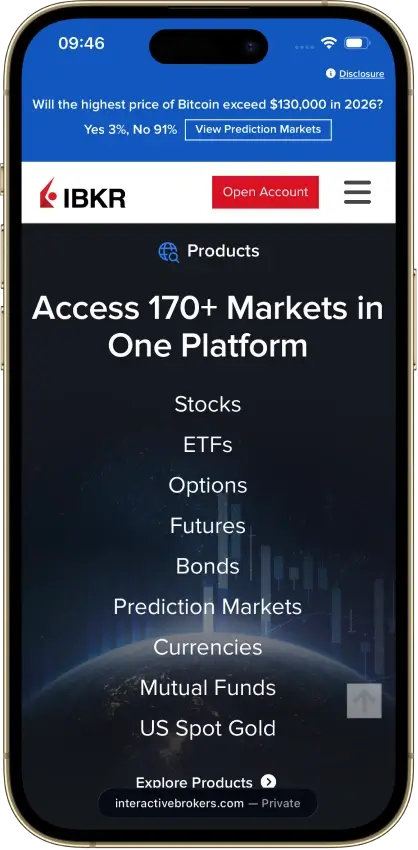
- About 170 markets in 40 countries and territories
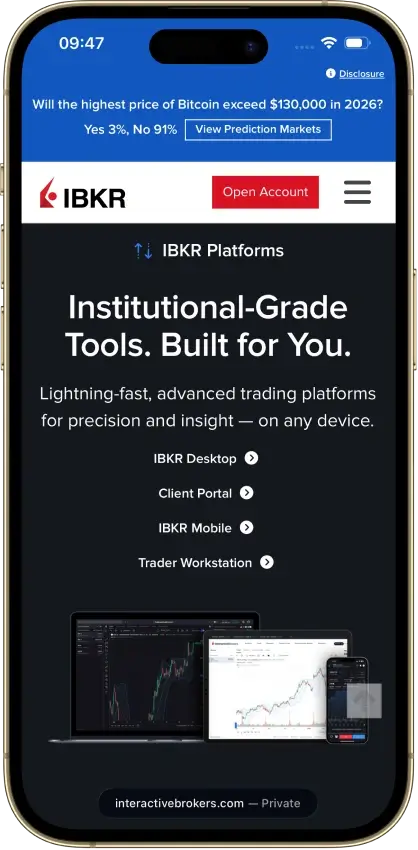
- TWS, IBKR Desktop, paper trading and APIs
- IBKR Pro margin 4.38% to 5.38% by loan size
 Charles Schwab
- Idle cash
- Low-yield cash sweep
- Spot crypto
- BTC/ETH: restricted rollout
- thinkorswim, futures and 12 direct foreign markets
- Fractional shares from $1 on most listed stocks
- All 13 spot Bitcoin ETFs and 5 XRP ETFs listed
 E*TRADE
- Idle cash
- Low-yield bank sweep
- Spot crypto
- Via Zero Hash; no transfers
- Power E*TRADE Pro desktop with paper trading
- Overnight trading from Sunday night to Friday
- Every IRA type and a Solo 401(k)
 Vanguard
- Idle cash
- Money market fund sweep
- Spot crypto
- None; crypto ETFs available
- Default cash earns 3.73% in a money market fund
- No payment for order flow in Q1 or Q2 2026
- $0 to buy Treasuries and new-issue CDs
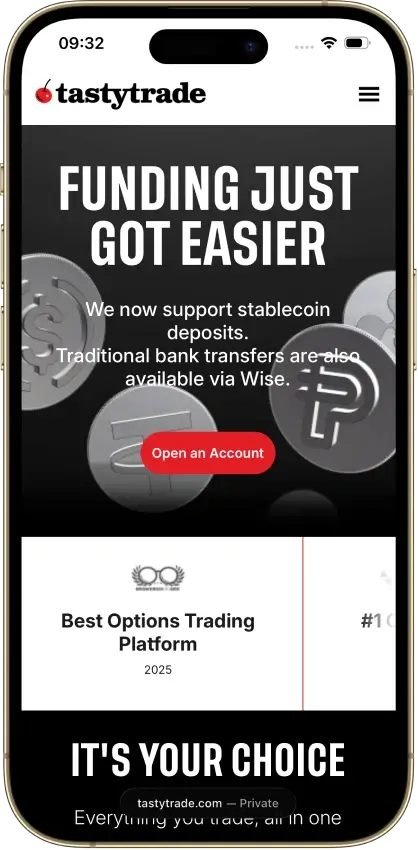
 tastytrade
- Idle cash
- Rate not disclosed
- Spot crypto
- Via Zero Hash
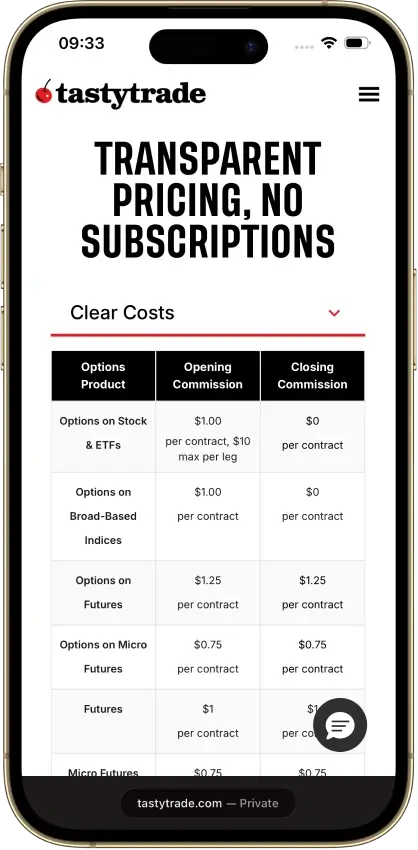
- $1 to open equity options, $10 leg cap, $0 close
- Futures and event contracts from the same login
- Desktop, web, mobile and an open API
 RobinhoodRestricted geo
- Idle cash
- 0% without Gold
- Spot crypto
- Separate service; transfers
- 3.6% APY on taxable cash with Gold
- 90 coins with on-chain transfers
- $0 per contract on equity and ETF options
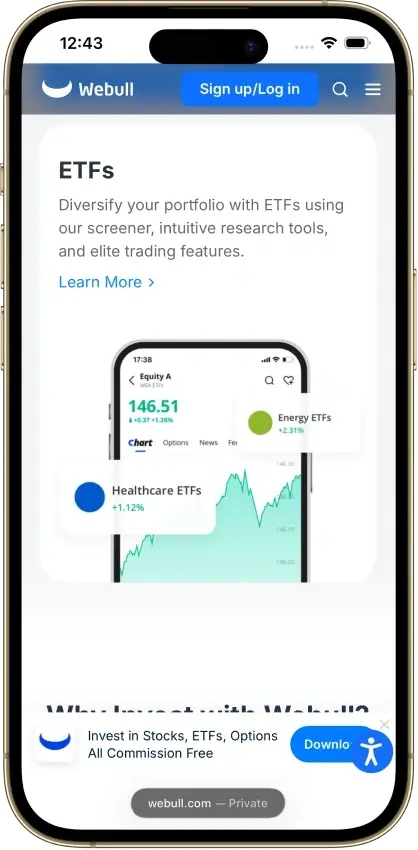
 Webull
- Idle cash
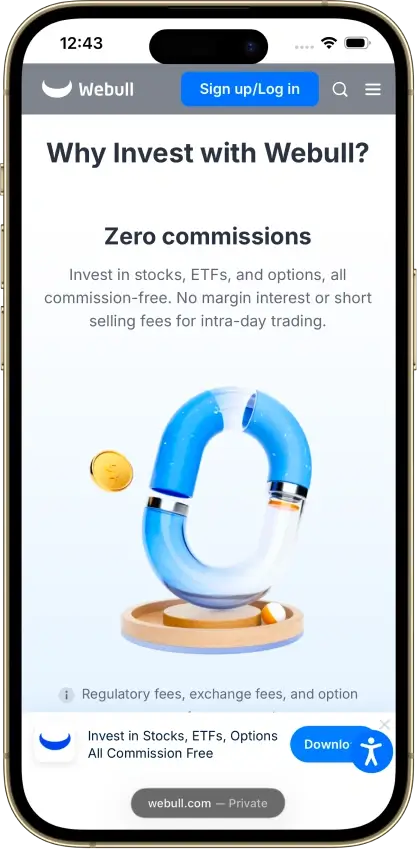
- 0% until you opt in
- Spot crypto
- Separate crypto service
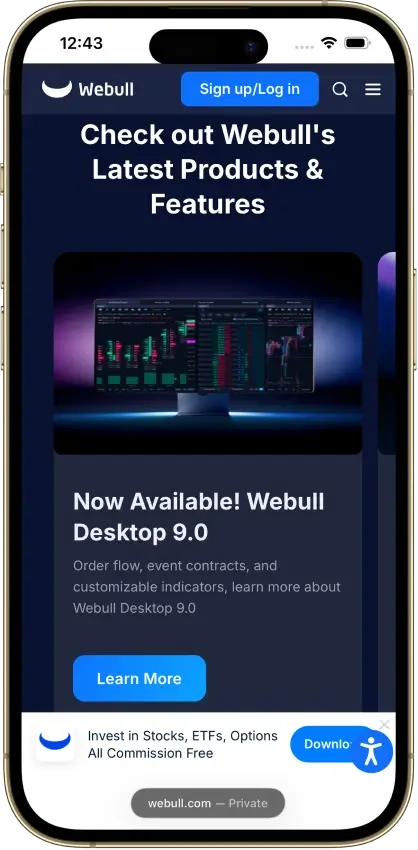
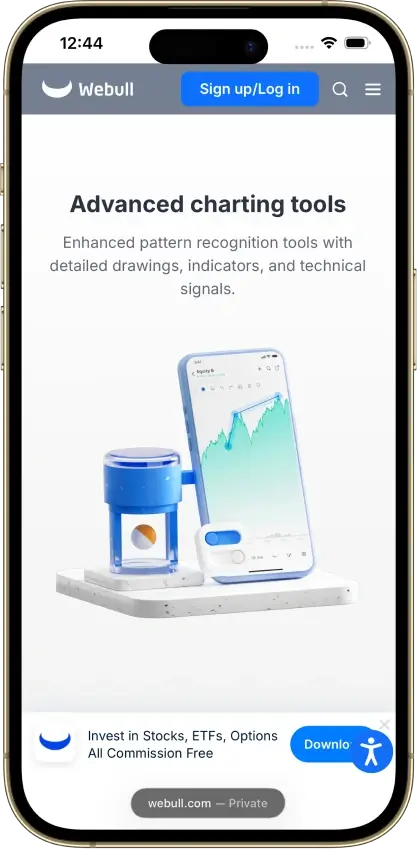
- Desktop apps for Mac, Windows and Linux
- $0 per contract on stock and ETF options
- paperTrade simulator and the Webull OpenAPI
 eToro
- Idle cash
- 0%; cash outside SIPC
- Spot crypto
- 1% trading fee; limits apply
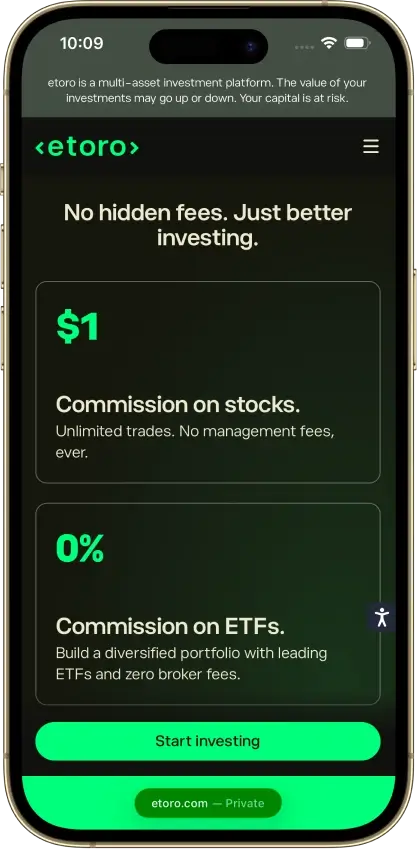
- Options at $0 commission and $0 per contract
- 114 buyable coins, 39 for New York residents
- CopyTrader copies other US customers
CryptoSlate may earn a commission when you visit partner sites through links on this page, at no extra cost to you. Our rankings and reviews remain editorially independent and based on our published methodology. Read disclosure
Disclaimer: CryptoSlate may receive a commission when you click links on our site and make a purchase or complete an action with a third party. This does not influence our editorial independence, reviews, or ratings, and we always aim to provide accurate, transparent information to our readers.A practice account helps you learn an order ticket, while retirement account availability determines whether you can hold the investment in the account you actually want. Neither feature compensates for fees or cash terms that do not suit your balance.
Best Brokerage Accounts Compared
| Broker | Rating /10 | Opening minimum | Standard stock/ETF options fee | Cash arrangement and dated yield | Retirement accounts | Spot crypto |
|---|---|---|---|---|---|---|
| Fidelity | 8.1/10 | $0 | $0.65 per contract, plus $0.14–$0.50 on index options | SPAXX core: 3.41% 7-day yield; FCASH: 1.94%; FZFXX also available. Core choice and eligibility vary | Traditional, Roth, Rollover, SEP, SIMPLE, Solo 401(k) | Fidelity Digital Assets, National Association; five assets |
| Interactive Brokers | 7.3/10 | $0 | Lite: $0.65/contract. Pro: $0.25–$0.65 plus exchange/clearing fees | First $10k earns 0%; above: Lite 2.380%, Pro 3.380%, scaled by account size | Traditional, Roth, Rollover, SEP, SIMPLE, Inherited | Zero Hash or Paxos by account type; up to 20 coins |
| Charles Schwab | 7.2/10 | $0 ($2,000 to borrow on margin) | $0.65 per contract, proprietary index fee passed through | Bank sweep: 0.01% APY; Schwab One Interest is an alternative, depending on account eligibility | Traditional, Roth, Rollover, SEP, SIMPLE, Inherited, Custodial IRA, Solo 401(k) | BTC/ETH via Schwab Crypto; phased rollout, eligibility and geographic restrictions apply |
| E*TRADE | 6.5/10 | $0 | $0.65/contract; $0.50 at 30+ trades/quarter; index options add up to $0.66 | 0.01% APY below $500,000 in the Bank Deposit Program | Traditional, Roth, Rollover, SEP, SIMPLE, Inherited, Solo 401(k) | Zero Hash LLC; BTC, ETH and SOL |
| Vanguard | 6.1/10 | $0 | $1 per contract, exercise and assignment free | VMFXX: 3.73% annualized 7-day yield; money market fund, not FDIC-insured | Traditional, Roth, SEP, Custodial IRA | None. Third-party crypto ETFs only |
| tastytrade | 6.0/10 | $0, and $2,000 to keep margin privileges | $1 to open, $0 to close; $10/leg cap except index options; SPX adds $0.60 | Credit balance at Apex; rate not disclosed | Traditional, Roth, SEP, Inherited | Zero Hash; 26 coins; individual accounts only |
| Robinhood | 5.9/10 | $0 | $0 per equity or ETF contract. Index options $0.50 per contract, $0.35 with Gold | 0% without Gold; 3.6% APY with Gold; IRAs 0% | Traditional, Roth | Robinhood Crypto, LLC; 90 coins; availability varies |
| Webull | 5.9/10 | $0, or $2,000 for margin | $0 on stock and ETF options. Index options $0.50 per contract | 0% before enrollment; enrolled cash: 0.50% APY Standard, 3.6% Premium; IRA: 0.10%, no Premium uplift | Traditional, Roth, Rollover | Webull Pay LLC; 70+ coins reported; availability varies |
| eToro | 4.0/10 | $50 first deposit by debit card, online banking or PayPal; $500 by wire | $0 commission and $0 per contract, plus regulatory pass-through fees | 0%; stock-sale cash moves to eToro USA LLC outside SIPC | None | eToro USA/NY LLC; 114 coins, 39 in NY |
Compare Idle Cash
Illustrative one-year return on $10,000 at the stated rate, before rate changes or account conditions.
| Name | Default Cash Vehicle | Rate | $10,000 for One Year | Higher Rate Requires |
|---|---|---|---|---|
| Fidelity | Money market fund at the broker (SIPC) | SPAXX core: 3.41% 7-day yield; FCASH: 1.94%; FZFXX also available. Core choice and eligibility vary | $341.00 | Opt-in |
| Interactive Brokers | Broker-dealer (SIPC) | First $10k earns 0%; above: Lite 2.380%, Pro 3.380%, scaled by account size | $0.00 | Not disclosed |
| Charles Schwab | Program banks (FDIC) | Bank sweep: 0.01% APY; Schwab One Interest is an alternative, depending on account eligibility | $1.00 | Buying a fund |
| E*TRADE | Program banks (FDIC) | 0.01% APY below $500,000 in the Bank Deposit Program | $1.00 | Buying a fund |
| Vanguard | Money market fund at the broker (SIPC) | VMFXX: 3.73% annualized 7-day yield; money market fund, not FDIC-insured | $373.00 | Nothing |
| tastytrade | Broker-dealer (SIPC) | Credit balance at Apex; rate not disclosed | Not disclosed | Not disclosed |
| Robinhood | Broker-dealer (SIPC) | 0% without Gold; 3.6% APY with Gold; IRAs 0% | $0.00 | Subscription |
| Webull | Broker-dealer (SIPC) | 0% before enrollment; enrolled cash: 0.50% APY Standard, 3.6% Premium; IRA: 0.10%, no Premium uplift | $0.00 | Opt-in and subscription |
| eToro | Non-SIPC affiliate | 0%; stock-sale cash moves to eToro USA LLC outside SIPC | $0.00 | Not disclosed |
Cash illustration assumptions: The $10,000 column estimates one year’s gross income with a constant balance and an unchanged stated rate or yield, before tax. Money market fund figures, including Vanguard’s $373 example, annualize the displayed seven-day yield. They are illustrations, not forecasts or guaranteed returns.
Fidelity’s illustration uses a selected SPAXX core position; FCASH and FZFXX are alternative core options. “Opt-in” refers to selecting the core, not buying fund shares manually for each deposit. Schwab’s illustration uses its bank sweep; Schwab One Interest is an alternative brokerage cash feature. The arrangement depends on your account and selection. IBKR’s first $10,000 earns no interest, so its example is $0; higher cash balances, account value and Lite/Pro pricing determine interest above that threshold. Robinhood and Webull examples use cash before optional paid-plan or enrollment benefits.
Brokers are ordered by their unrounded weighted totals, with alphabetical order for exact ties. Cash arrangements and selected pricing were checked October 8, 2026.
The opening minimum is not a margin requirement or the minimum purchase for every investment. Options fees shown apply to standard stock and ETF contracts. Exchange, clearing, regulatory, index-option and other charges can apply. Account eligibility, crypto availability and permitted investments vary by state, account and approval level.
Detailed Broker Reviews
Fidelity
- Idle cash
- Core choice sets the yield
- Spot crypto
- Separate account; transfers
Pros
- No brokerage, IRA, inactivity or transfer-out fee
- Direct trading in 25 foreign markets
- Spot crypto with on-chain withdrawals
- Every IRA type, HSA, 529 and a Crypto IRA
- 0 pending BrokerCheck events at FBS and NFS
Cons
- You pick the cash option, with no stated default
- Check and EFT deposits wait 7 business days
- 1% crypto fee, network-fee surplus kept
- 12.075% margin rate on balances under $25,000
- No futures, no staking, no spot XRP

Interactive Brokers
- Idle cash
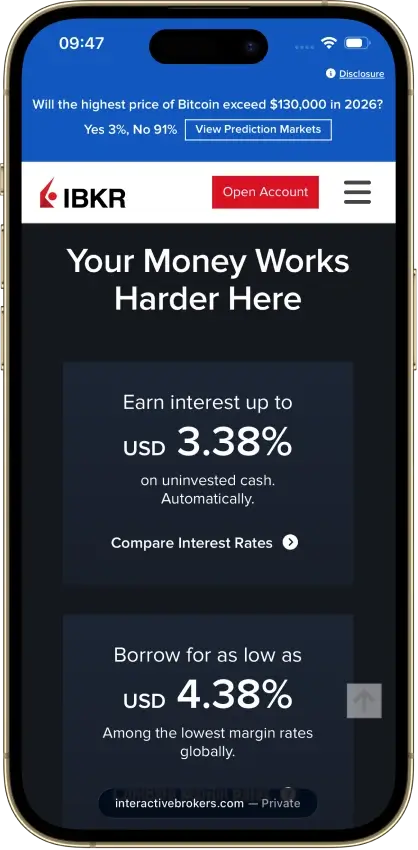
- First $10,000 earns 0%
- Spot crypto
- Via Zero Hash or Paxos
Pros
- Up to 3.38% on cash above $10,000 with IBKR Pro
- Direct access to foreign stock exchanges
- No ACATS, account or inactivity fee
- Direct routing and free algos on IBKR Pro
Cons
- The first $10,000 of cash earns nothing
- Top complaint: no reachable human
- 36 regulatory events since September 2021
- 44-business-day hold on ACH cash to another bank

Charles Schwab
- Idle cash
- Low-yield cash sweep
- Spot crypto
- BTC/ETH: restricted rollout
Pros
- $0.65 options with free exercise and assignment
- thinkorswim with paperMoney and 24/5 trading
- Futures and 12 direct foreign markets
- All 13 spot Bitcoin ETFs, no extra agreement
- $0 account and IRA fees
Cons
- Brokerage cash sweeps pay 0.01% APY
- Options approval moves cash out of FDIC sweep
- Spot crypto is BTC and ETH only, no IRA
- $50 to transfer a full account out
- Margin costs 12.075% under $25,000



E*TRADE
- Idle cash
- Low-yield bank sweep
- Spot crypto
- Via Zero Hash; no transfers
Pros
- Custom scans and an ETF screener on Power E*TRADE
- Options fall to $0.50 at 30+ trades a quarter
- Paper trading funded with play money
- Solo 401(k) and SIMPLE IRA for small businesses
- $0 minimum, ACH deposits usable on day three
Cons
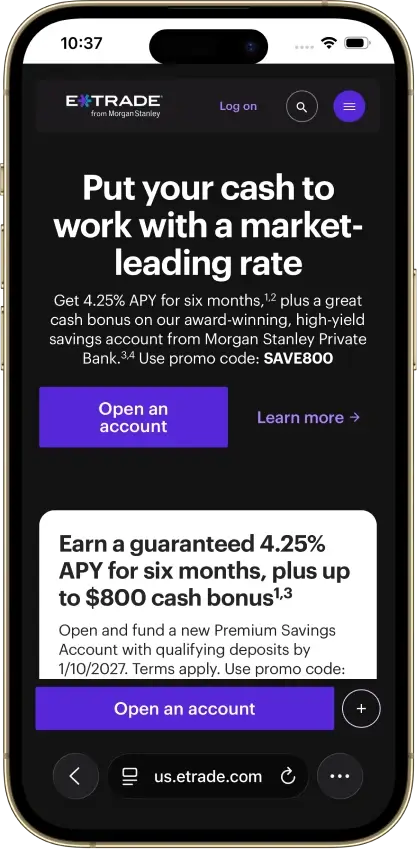
- Default sweep pays 0.01% APY below $500,000
- Three coins and no crypto transfers yet
- $75 fee to move the whole account out
- SEC orders over data and advisor theft
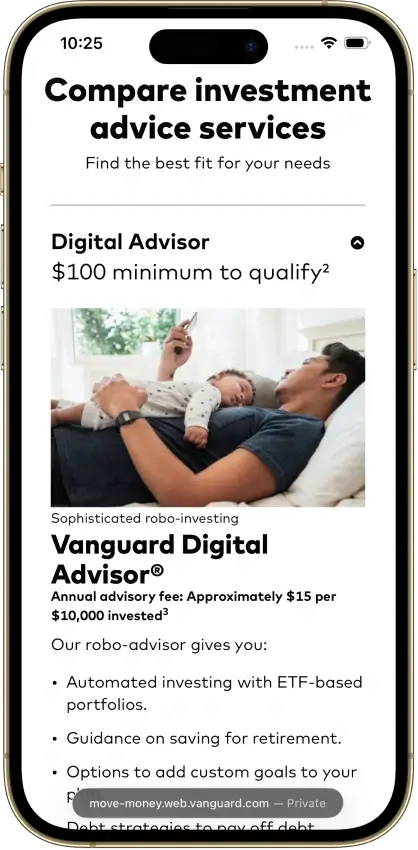
Vanguard
- Idle cash
- Money market fund sweep
- Spot crypto
- None; crypto ETFs available
Pros
- Default cash earns a money market yield
- Self-clearing, no pending BrokerCheck events
- Treasuries and new-issue CDs cost $0
- 529 plan plus custodial and trust accounts
Cons
- $100 per account to transfer out below $5M
- No spot crypto, undefined memecoin ETF ban
- Four basic order types, options exercised by phone
- 7-calendar-day hold on bank and check deposits


tastytrade
- Idle cash
- Rate not disclosed
- Spot crypto
- Via Zero Hash
Pros
- $0 to close equity options, $10 leg cap
- Futures and event contracts in one account
- Open API with a developer sandbox
- $0 minimum and commission-free T-bills
Cons
- No published interest rate on cash
- $850,000 FINRA fine over order routing in 2026
- No retail paper trading and no mutual funds
- Crypto withdrawals paused two months in 2026
Robinhood
- Idle cash
- 0% without Gold
- Spot crypto
- Separate service; transfers
Pros
- No contract fee on equity or ETF options
- 3.6% APY on taxable cash with Gold
- 1% IRA match, or 3% on Gold contributions
- Overnight trading on select stocks and ETFs
Cons
- Uninvested cash earns 0% without Gold
- A $100 fee on every transfer out
- IRA match lost if money leaves within five years
- Four open investigations in its own filings
- No mutual funds or individual bonds


Webull
- Idle cash
- 0% until you opt in
- Spot crypto
- Separate crypto service
Pros
- Charting apps for three desktop operating systems
- Treasuries from $100 at a 0.1% markup
- Paper trading and an OpenAPI for developers
- Overnight session, Sunday to Thursday nights
Cons
- Cash earns 0% until the investor opts in
- 3.6% cash rate requires a $40-a-year plan
- No stated clearing setup for new cash accounts
- No SEP IRA or Solo 401(k) for the self-employed
- Phone support weekdays, 8 a.m. to 5 p.m. ET
eToro
- Idle cash
- 0%; cash outside SIPC
- Spot crypto
- 1% trading fee; limits apply
Pros
- Copy up to 100 US accounts, no extra fee
- 114 buyable coins, 39 in New York
- Smart Portfolios with no management fee
- ACH deposits can be traded instantly
Cons
- Stock-sale cash leaves SIPC and earns 0%
- No IRAs, mutual funds, bonds or futures
- 2% fee to move coins to eToro's wallet
- No extended-hours trading for stocks

Fidelity and Vanguard make the cash settlement choice part of the account decision, while Robinhood and Webull attach conditions to interest on eligible cash. Access to a separate crypto service also needs its own check of custody and protections. Compare the account and cash setup you will actually use, including any subscription, enrollment or product restrictions.
How We Rank
- Investments & account choice 28% weightWhat we assess
Available securities, fractional investing, crypto access, account types, eligibility, and product restrictions within each account.
What earns 10/10 Stocks, ETFs, funds, bonds and options cover taxable, joint and core retirement needs, with broad $1 fractional investing and clearly documented access to spot crypto and crypto ETFs. - Safety, custody & transparency 20% weightWhat we assess
Serving entities, asset custody, investor protections, account security, regulatory record, and clarity of terms and conflicts.
What earns 10/10 Entities and asset protections are verified, custody terms and conflicts are clear, account controls work, and no material customer-asset or data-control failure remains unresolved. - Fees & cash returns 18% weightWhat we assess
Trading, margin, currency conversion, account and exit costs, plus default cash yields, subscription charges, and eligibility.
What earns 10/10 Options cost no more than $0.65 per contract, routine account and exit fees are absent, and default cash meets our dated money-market yield benchmark without enrollment or a paid plan. - Execution & order handling 10% weightWhat we assess
Execution prices, fill rates, speed, order controls, routing, payment for order flow, and relevant trading sessions.
What earns 10/10 Comparable execution data shows competitive prices, fill rates and speed, with useful order controls, clear routing and payment disclosures, and no unresolved material execution failure. - Platform, tools & research 10% weightWhat we assess
Web and app usability, reliability, portfolio records, research, screeners, and tools relevant to the intended investor.
What earns 10/10 Core investing tasks work reliably on the intended devices, with clear portfolio records, useful research and screening tools, and accurate order previews and confirmations. - Funding, withdrawals & transfers 8% weightWhat we assess
Opening minimums, deposit availability for trading and withdrawal, settlement, holds, payout timing, and account transfers.
What earns 10/10 No opening minimum applies, standard bank-deposit holds are at most three business days, and routine withdrawals and transfers meet clearly published timings. - Support & issue resolution 6% weightWhat we assess
Human support availability, response quality, urgent account help, and escalation of unresolved cases.
What earns 10/10 Human support resolves routine queries during trading hours, provides a 24/7 route for urgent account-security issues, and offers a clear escalation process for unresolved cases.
We assess US brokerage services using fee schedules, account agreements, regulatory records, published execution information and documented product features. Ratings cover the account as a whole. A broker can be useful for a specific task while scoring less well on cash returns, support or retirement choices.
Each pillar is scored out of ten and rounded up to a whole number before its weight is applied. The overall rating is the weighted average, rounded to one decimal place. We do not assume that a missing disclosure means a feature is available or that an unresolved claim is proven.
Paid plans, optional cash programs and separate crypto services keep their conditions attached. User complaints can identify recurring problems, but an isolated post does not establish company policy. These comparisons use documented information and do not claim a new live-account trading test. Read our review rating methodology for the scoring framework.
Best Brokerage Accounts for Beginners
A beginner needs to be able to buy the intended investment, understand the order and get help if the account is restricted. A small opening minimum helps, but fractional investing matters more when one share costs more than the amount available to invest. Check whether fractions are available for the ETF or stock you want, including in an IRA.
Compare the best online brokers using these practical features:
- A cash account option that does not require borrowing to invest.
- Clear order previews showing the investment, quantity, order type and estimated cost.
- Recurring purchases for the investments you intend to hold.
- Accessible statements, tax documents and a route to human support.
- Cash terms that explain interest, enrollment and withdrawal holds.
The best stock brokers for beginners should remain useful after the first purchase. Check joint accounts, retirement accounts and transfer terms if you expect your needs to change. An opening promotion is less useful if moving the account later costs more than the benefit received.
What Your Idle Cash Earns
Uninvested money may remain as a brokerage credit balance, move into a bank sweep or buy shares in a money market fund. The account agreement determines which arrangement applies automatically and which needs a choice or enrollment. A separate savings product offered by the same group does not establish the rate on brokerage cash.
The following illustration uses hypothetical APYs and a constant $10,000 balance for one year. It assumes the APY stays unchanged and deducts the stated annual subscription separately. These are examples, not current broker offers.
| Illustrative cash arrangement | Assumed APY | Annual charge | Interest on $10,000 | Interest less charge |
|---|---|---|---|---|
| No interest | 0% | $0 | $0 | $0 |
| Low-rate bank sweep | 0.01% | $0 | $1 | $1 |
| Interest-bearing cash without subscription | 3.50% | $0 | $350 | $350 |
| Interest-bearing cash with subscription | 3.50% | $60 | $350 | $290 |
The subscription in this example consumes the interest on roughly $1,714 at the assumed APY. That is only the break-even balance against earning nothing. If a free alternative paid the same APY, paying for interest alone would leave you worse off at every balance.
A money market fund usually quotes a seven-day yield, which annualizes recent income. It should not be treated as an APY or a promise of next year's income. Also check whether the fund automatically covers purchases, whether you must sell shares yourself and how quickly the proceeds become available.
A headline rate applying only above a threshold can differ from the effective return on all your cash. Calculate using the amount that qualifies, then subtract subscription and account charges.
How Your Money Is Protected
SIPC helps recover missing customer assets when a member brokerage fails. Protection is limited to $500,000 per customer in a separate capacity, including up to $250,000 for cash held for securities investing. It does not reimburse market losses or guarantee the value of a stock, fund or crypto investment.
FDIC insurance generally covers $250,000 per depositor, per insured bank, per ownership category. Cash placed at a bank through a broker is combined with other deposits you hold at that bank in the same category. A large advertised sweep limit therefore depends on the participating banks, allocation and your existing deposits.
Money market fund shares are securities, not insured bank deposits. They may receive SIPC protection against missing assets in a broker failure, but that does not insure their investment value. Spot crypto held through a separate crypto provider also should not be assumed to share the protections of the brokerage account.
Compare the legal entity holding each asset and the account agreement that applies. A familiar app name can cover several services. For a large balance, read the limits of any excess coverage and check the underlying banks instead of adding advertised protection figures together.
Choosing the Best Trading Platform for Your Needs
For monthly ETF purchases, clear order entry, recurring investing and useful account records can matter more than charting features. An options trader may need multi-leg tickets, exercise information and a way to view exposure across positions. Someone trading international shares also needs to understand currency conversion and market-specific charges.
Paper trading can help you learn platform controls. Simulated fills do not prove that a real order will execute at the same price or speed. Check published execution and routing information separately from screenshots of the trading platform.
Payment for order flow means a broker receives compensation associated with routing orders. Its presence alone does not establish whether execution is good or bad. Compare relevant execution measures on a consistent basis, including the products, order sizes and periods covered by a report.
The best stock trading platform for your needs should also explain what happens outside regular market hours. Available order types, liquidity and spreads can differ. Confirm how to cancel an order and reach support when the app or website is unavailable.
Retirement Accounts and Crypto Exposure
A broker offering an IRA may still lack the business retirement plan or investment you need. Confirm the account type first, then check its permitted investments, recurring purchases, cash arrangements and closing charges. Tax treatment and withdrawal rules also differ between taxable accounts and retirement accounts.
An IRA match may involve subscription, holding-period and repayment conditions. Compare those conditions with the account's ongoing costs before transferring a retirement balance. A rollover also deserves a separate comparison of the existing plan's investments, services and protections.
Shares in a Bitcoin ETF provide exposure through a brokerage security, with fund fees and brokerage trading hours. They do not let you withdraw bitcoin to a wallet. Buying coins directly involves a crypto service's custody, transfer and eligibility terms, as explained in our guide to US crypto exchanges.
Funding and Moving a Brokerage Account
Trading availability, settlement and withdrawal availability are separate stages. Most covered US securities transactions settle one business day after trading, known as T+1. That does not require a broker to release a new bank deposit for withdrawal the next day.
Before moving an existing account, check whether the receiving broker accepts every holding and whether the outgoing broker charges a transfer or closing fee. Fractional shares generally cannot transfer between brokers. Selling them can create a taxable event in a taxable account. Funds and crypto can also have transfer restrictions.
Keep enough available cash for any charges and review pending orders before initiating the transfer. If you expect to need the money soon, compare the published deposit and withdrawal holds with that deadline before funding the new account.
FAQ
What is the best brokerage account?
The best account depends on the investments, account type and support you need. Compare those requirements with total costs and the treatment of uninvested cash. Use the investor picks for a shortlist, then read the individual review and account terms.
Which brokerage account is best for beginners?
Look for small-dollar investing, clear order previews and accessible human support. A cash account can let you start without borrowing, while recurring purchases may help with a regular investing plan. Check the permitted investments and cash settings before depositing.
How much money do I need to open a brokerage account?
Many self-directed accounts have no opening minimum, but an investment can have its own purchase minimum. Margin borrowing, options strategies and some funds can require more money. An account advertised with a $0 minimum does not make every trade available with no deposit.
Is my money protected if a broker fails?
Eligible missing securities and cash at a SIPC-member broker receive protection within applicable limits and account-capacity rules. Bank sweep deposits may qualify for FDIC insurance at participating banks. Neither arrangement protects against ordinary investment losses, and separate crypto services have different terms.
How is a brokerage account different from a bank account?
A brokerage account lets you buy and hold investments. A bank deposit account holds money under deposit terms and may qualify for FDIC insurance. Brokerage cash can sit in several arrangements, so check where it is held and which protection applies.
Can I have more than one brokerage account?
Yes. You can use different brokers for different account types or investments, although that adds statements, tax records and cash settings to manage. Multiple accounts at the same firm do not automatically multiply protection limits.