

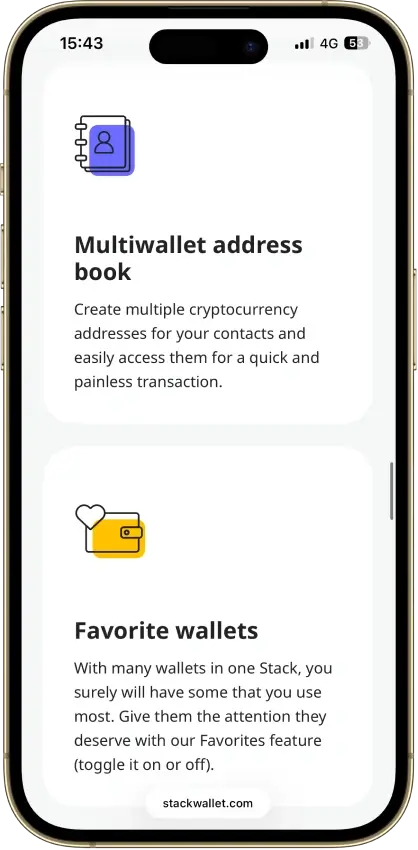
- Monero, Firo, Epic Cash and Wownero support
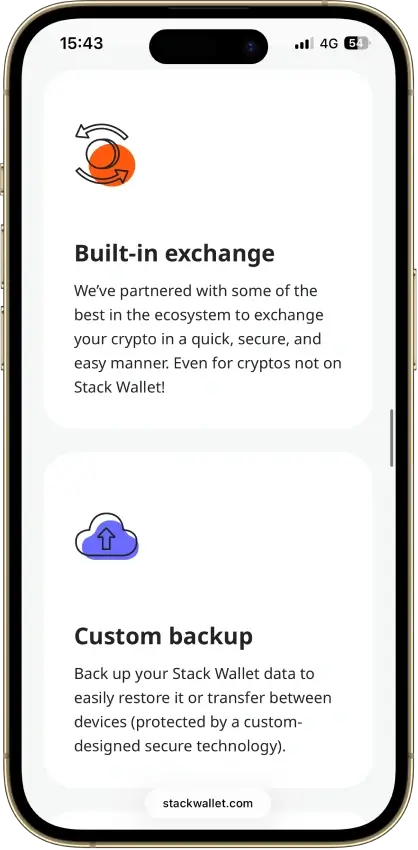
- Combined backup for multiple Stack wallets
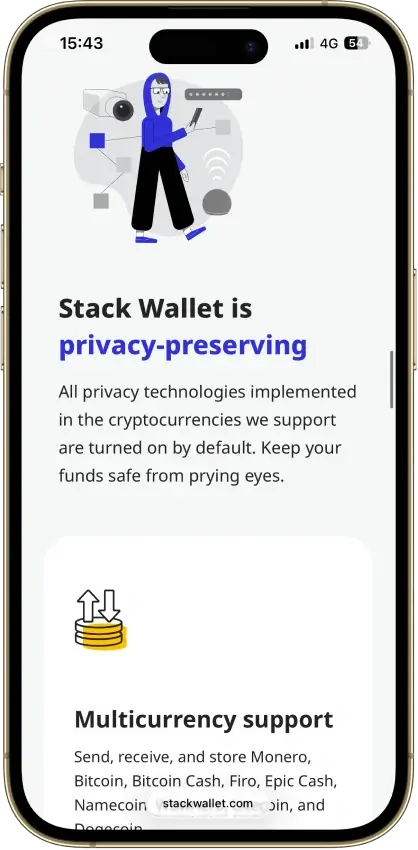
- Opt-in Tor routing for each node
Stack Wallet Overview
- Crypto Wallet Name
- Stack Wallet
- Wallet Type
- Multi-platform wallet
- Custodial Status
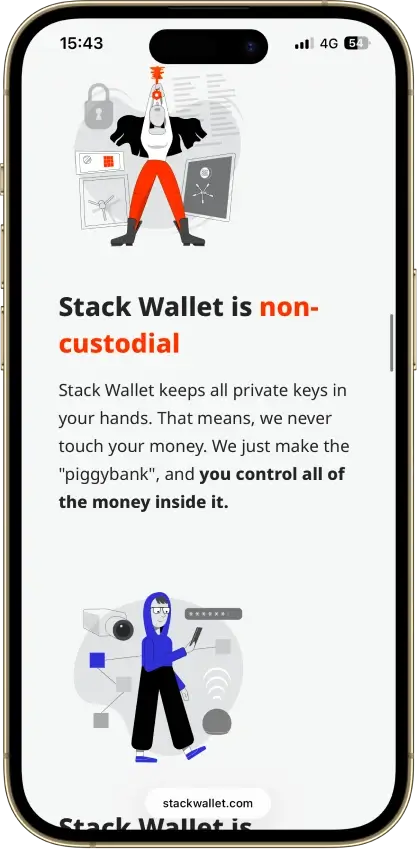
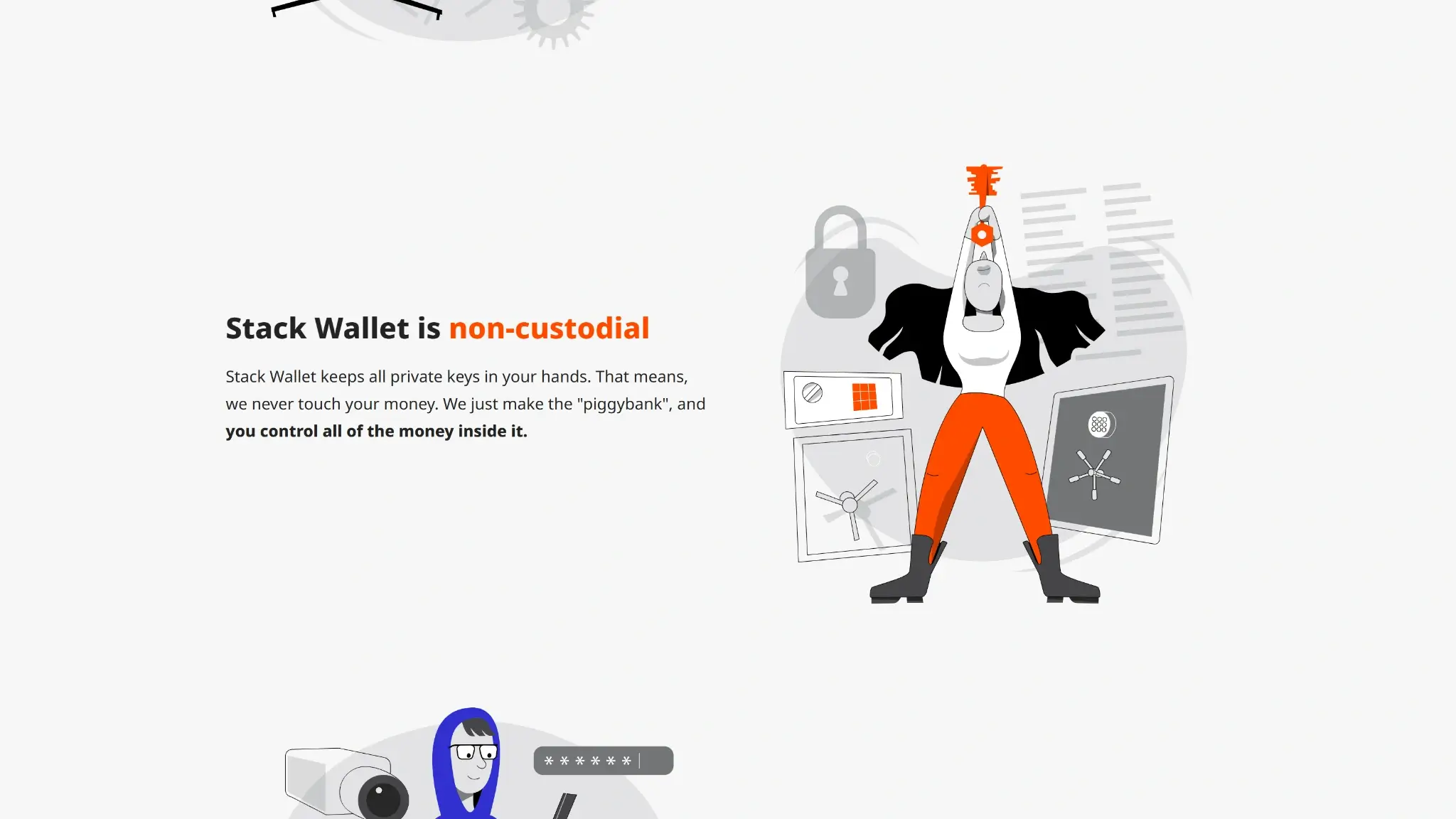
- Non-custodial
- Built-in Swaps
- Yes
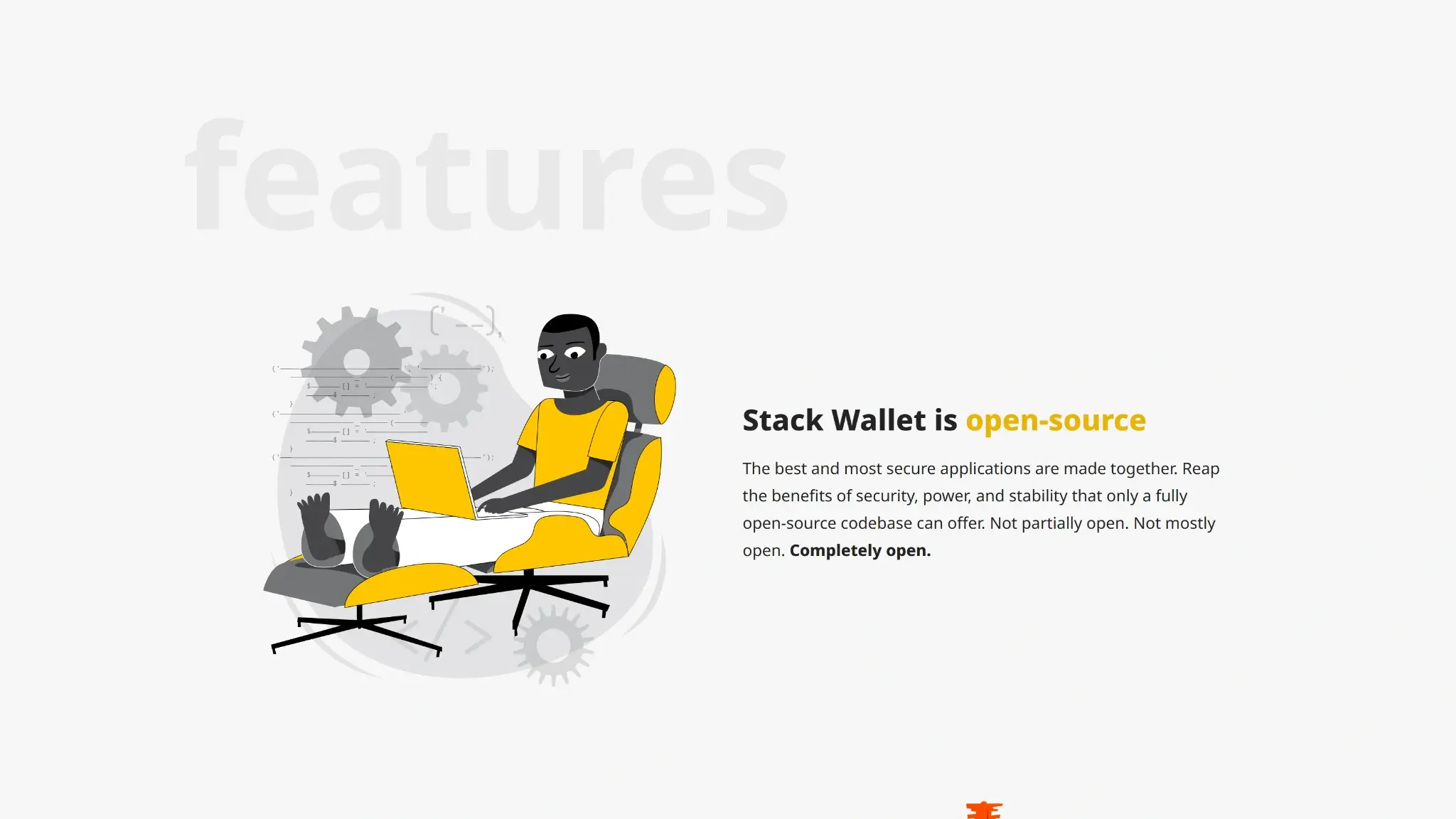
- Open-source
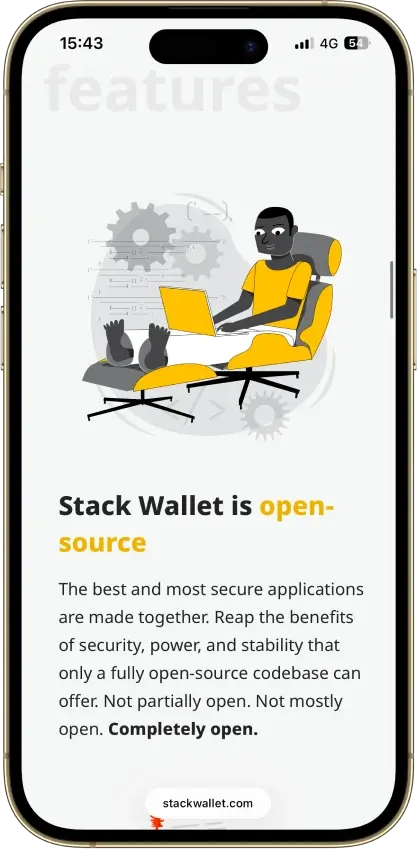
- Fully open-source
- Fiat On-ramp
- Yes
Additional details
- Supported Blockchains
- Ethereum, Solana, Bitcoin, Monero
- Token Standards
- SPL
- Platforms
- iOS, Android, Desktop (Windows), Desktop (macOS), Desktop (Linux)
- Hardware Wallet Support
- No
- Staking Support
- None
Stack Wallet Screenshots
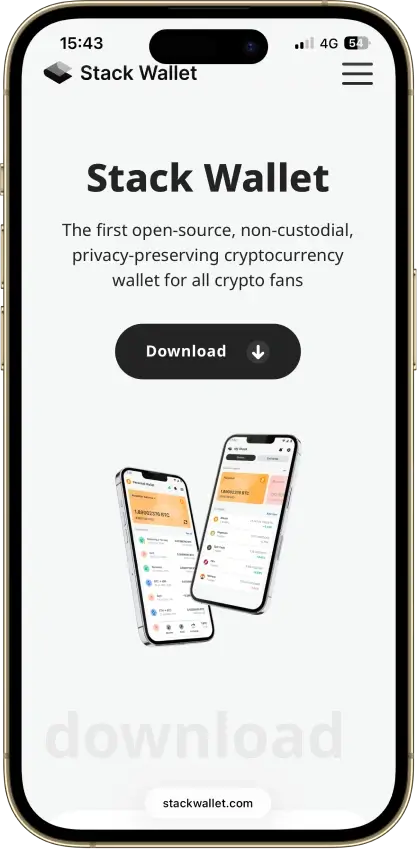
Screenshot 1 of 8
Stack Wallet Pros and Cons
Pros
- Public source code for technical inspection
- Apps for mobile and desktop alike
- Coin control on Bitcoin and privacy coins
- Point it at your own node per coin
- Its own F-Droid repo for Android
Cons
- No dApp browser or WalletConnect
- No hardware-wallet pairing
- App-level backup restores into Stack only
Who Stack Wallet Is Best For — And Who Should Skip It
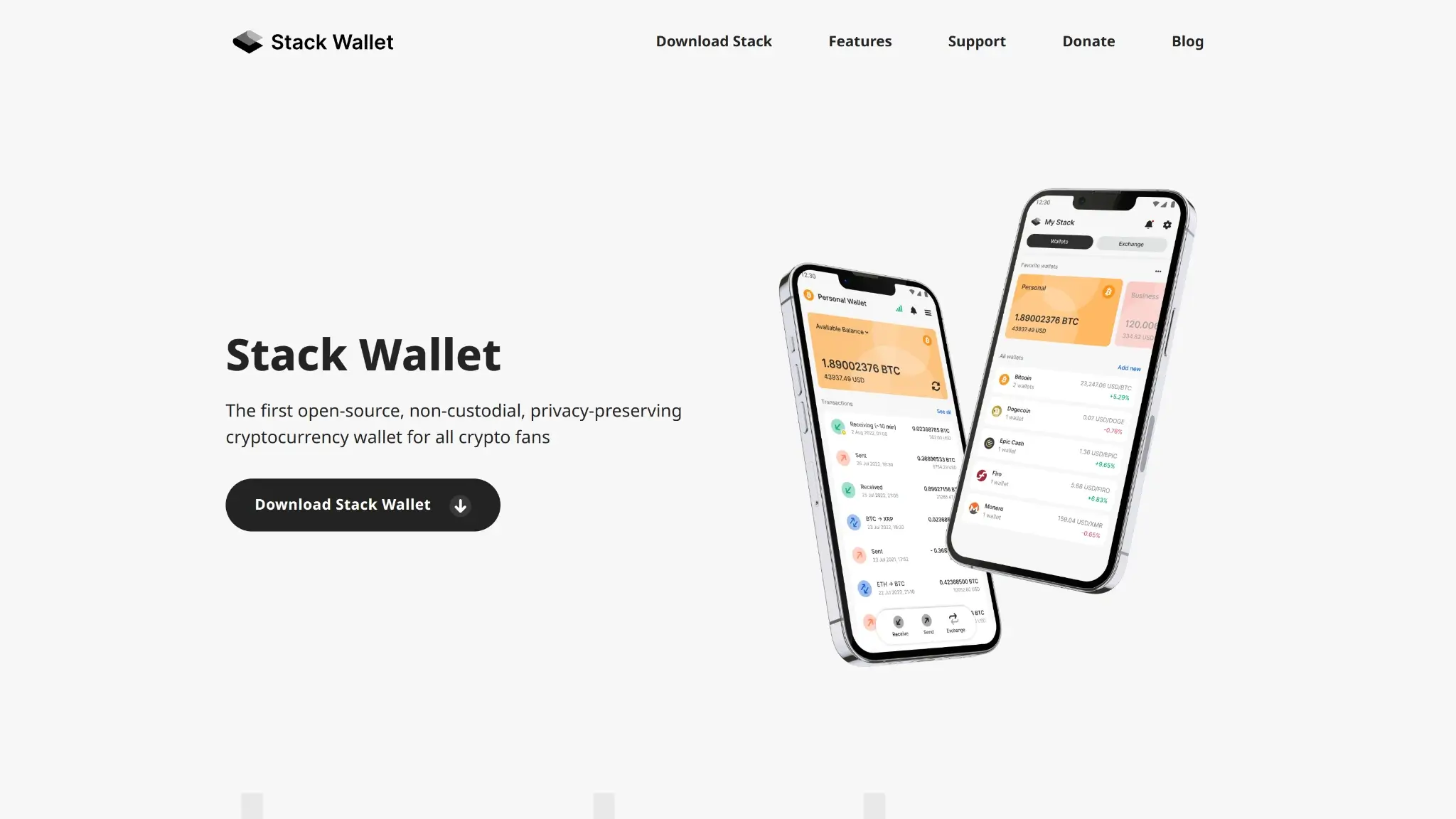
Stack Wallet supports Monero and Firo as well as Bitcoin and Ethereum without requiring a wallet account. Identity checks may still apply when using third-party services.
Stack Wallet is a good fit if you
- Hold Monero or Firo alongside BTC and ETH
- Want Epic Cash or Wownero support in the same app
- Want to manage keys locally without a wallet account
- Use Android and want the vendor's F-Droid repository, coin control or custom nodes
Choose another wallet if you
- Need a hardware device to approve transactions
- Need a dApp browser or WalletConnect
- Want integrated ETH or SOL staking
- Need a combined backup file that other wallet apps can restore
What Is Stack Wallet And How Does It Work?

Cypher Stack develops Stack Wallet, and the terms identify Stack Wallet LLC, a New Mexico limited liability company, as the company responsible for the app. The wallet supports privacy coins including Monero, Firo, Epic Cash and Wownero alongside Bitcoin and Ethereum.
The US App Store lists version 2.7.3, released September 16, 2026, with a Firo Spark fix. GitHub lists the main wallet release as 2.7.1 from August 24, 2026, with downloads for Android, Windows, Linux and macOS. The separate mwebd release is a component update, not a new Stack Wallet version.
Security and Custody
Stack Wallet generates and stores private keys on your device. Creating a wallet does not require an account or identity check. Third-party exchanges can impose KYC requirements when you use their services.
The source is public, and Android downloads include Google Play, a direct APK and Cypher Stack's F-Droid repository. Source availability does not prove that every distributed binary matches it. WalletScrutiny's June 2026 report on version 2.4.4 reproduced three of four Play Store split APKs, with differences in ten native libraries in the ARM64 split. That finding concerns a specific older build, not a test of version 2.7.3.
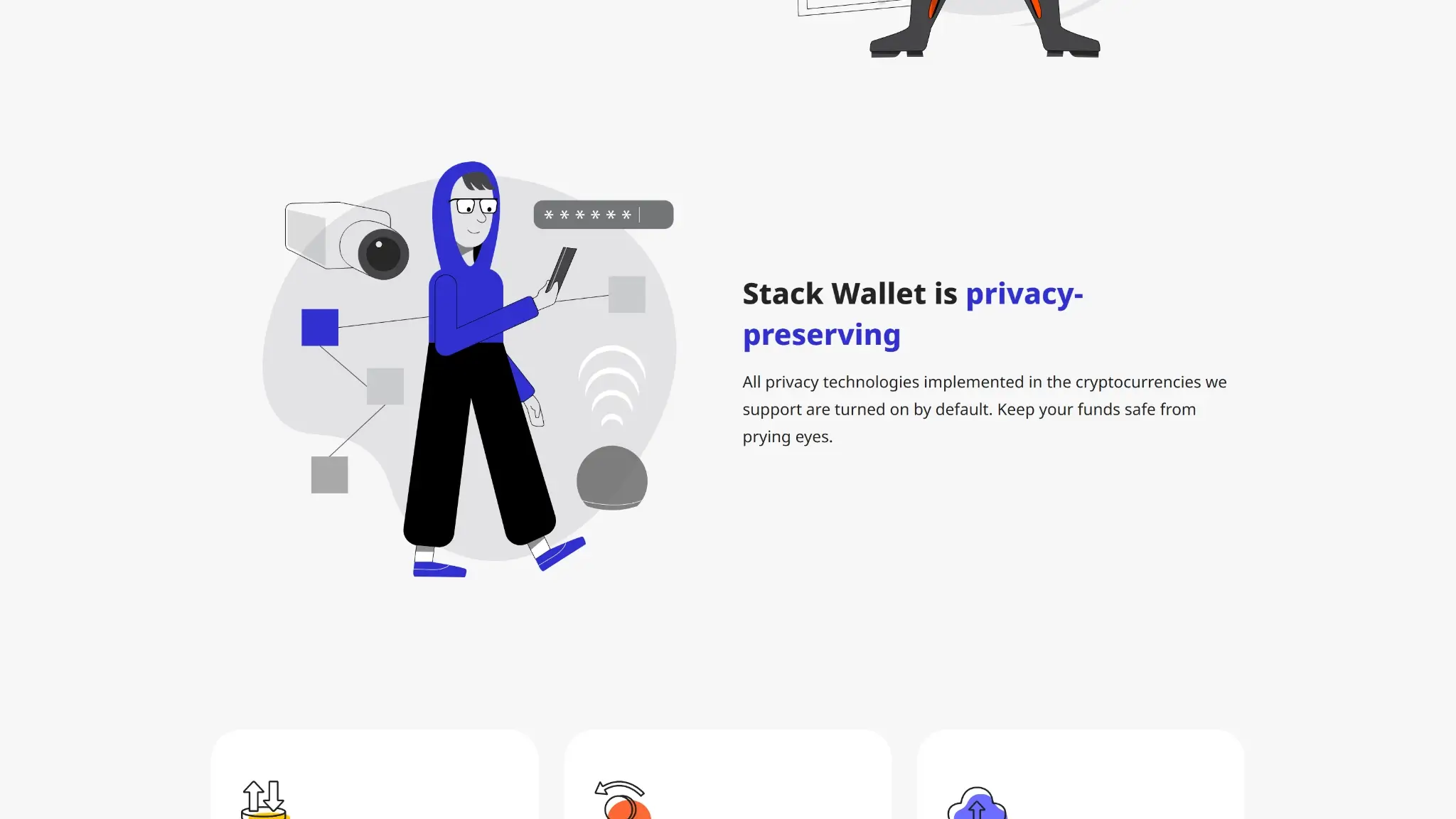
Tor routing is optional and disabled by default. Coin control lets you select outputs to spend where the coin implementation supports it. You can choose your own node or a third-party node instead of Stack's default. Stack's privacy policy also describes node metadata and temporary logs, so self-custody does not mean that network connections reveal no information.
Digilol's penetration-test summary reports a critical issue that could compromise the local file system and a separate denial-of-service issue. It does not identify the affected release or provide a patch status. The summary does not establish that these issues are exploitable in the current app.
Supported Chains and Assets
Stack supports Monero, Firo, Epic Cash and Wownero, as well as Bitcoin, Ethereum, Cardano and Dogecoin. Its homepage shows only nine coins, while release materials describe additional assets and features. Check the asset list in your installed version before sending funds.
Ethereum and Solana tokens are supported. The App Store release history documents Ethereum-token fixes and the addition of Solana tokens in version 2.4.3. This does not imply support for every EVM network or token. There is no dApp browser or WalletConnect for interacting with token applications.
Usability and Recovery
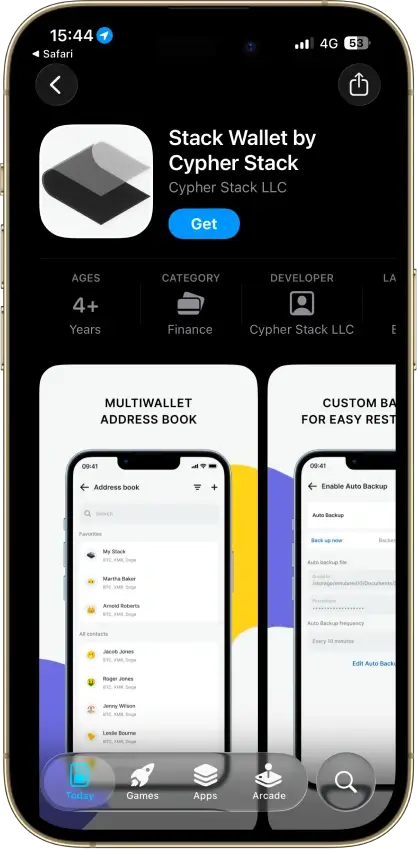
Stack has iPhone, iPad and Android apps, plus desktop downloads for Windows, macOS and Linux. It has no browser extension or WalletConnect connection.
Each individual wallet has its own recovery seed. Restoring that seed in another app requires compatible coin, seed-format and derivation-path support. Stack's combined SWB backup stores multiple wallets and restores into Stack Wallet only. Keep the individual seeds as well as any combined backup you rely on.
Monero wallets need blockchain synchronization before their balances and transaction history are current. A slow or unavailable node can require changing the node connection. These steps add work compared with an exchange account that manages synchronization for you.
Features
In-app exchanges use third-party providers. Stack adds a fee to the exchange service. The provider receives the assets being exchanged and sends the destination assets, so local key ownership does not remove provider custody during the swap. Review the final amount, network costs and provider requirements before sending.
Stack's public code includes buy and swap controls. Purchase availability depends on the app build and provider, including the user's location. The terms allow providers to require identity information and restrict access in some countries and US states.
The wallet has no hardware-wallet pairing or dApp browser. Keys remain on the connected device. Users who need hardware approval or dApp access must choose an app that supports those functions.
Cost
Stack Wallet is free to download and use. Sending funds incurs network fees. In-app exchanges include an additional Stack fee, while providers determine their own transaction charges and exchange terms. A purchase or swap quote can therefore cost more than the network fee alone. Check the total amount received before accepting it.
Comparison with Other Wallets
-


Cake Wallet
Cake Wallet brings Monero, Bitcoin and other networks into an account-free app with detailed payment and privacy controls. Those controls need attention: a shared seed is optional, Lightning has its own balance,...
-

Feather Wallet
Feather Wallet is a desktop Monero wallet with output controls, configurable node connections and offline signing. Its default Tor mode excludes initial synchronization. View-only wallets need key images to track spent outputs,...
-

Monerujo Wallet
Monerujo is an Android wallet for people who spend Monero and want to choose the node their phone uses. It combines local key storage with tools for repeated payments, separate accounts and...
Hardware signing, supported coins and the operating system distinguish these crypto wallets:
- Cake Wallet supports hardware-wallet connections on compatible devices and platforms, alongside Monero and third-party purchase services.
- Feather Wallet is a Monero desktop wallet with coin control and Tor.
- Monerujo Wallet provides a dedicated Monero app for Android.
Stack combines Firo and Epic Cash with its other supported coins. Check the specific coins and hardware connection you need before choosing an alternative.
Crypto Wallets Pillar Scores
- Custody and key security 30% weight Who can authorize spending, protection of keys and signing, and independent access to every reviewed account type.8.5 / 10
- Security validation and track record 25% weight Independent security assessments, their coverage and findings, plus updates and the handling of known incidents.6.5 / 10
- Transaction safety and signing 20% weight Transaction details, signing warnings, scam checks, permission controls and the handling of unreadable requests.7.5 / 10
- Backup and recovery 10% weight Repeatable backup checks, complete restoration, recovery dependencies, costs and resilience after backup loss.8.0 / 10
- Usability, privacy and costs 10% weight Setup and everyday tasks, accessibility, support guides, data-sharing choices and device, service and transaction costs.8.0 / 10
- Assets, networks and compatibility 5% weight Asset and network support, devices, companion apps and connections needed for the uses covered in the review.9.0 / 10
Final Verdict
Stack Wallet suits holders who want Monero, Firo, Epic Cash and Wownero in a self-custody app for mobile or desktop. Tor is optional and off by default. The app has no hardware-wallet pairing or dApp browser, and its combined backup restores only into Stack. Public source code makes inspection possible, while Digilol's penetration-test summary leaves the affected version and remediation status unspecified. Third-party exchange and purchase services have their own fees, identity checks and geographic limits.

CryptoSlate may earn a commission when you use partner links, at no extra cost to you. Our reviews, ratings, and editorial decisions remain independent of advertisers. Read How CryptoSlate Makes Money for funding details.