
Satoshi’s identity proven in 2026?
Current Odds
Odds Summary
Polymarket reports 2.1% for Yes and 98% for No.
Polymarket · Last synced
Market Analysis
Satoshi Proof Market Treats Mystery as a Cryptographic Burden
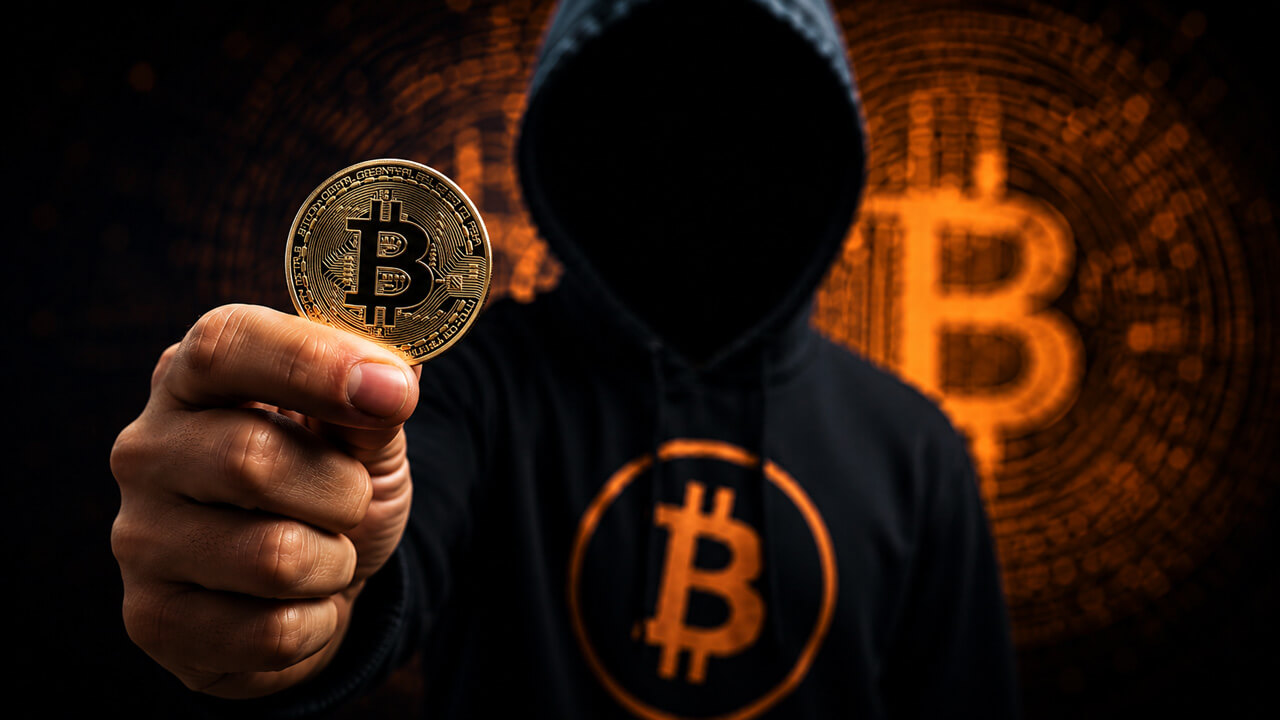
The market is pricing a high bar for proof after media theories and legal claims failed to settle Bitcoin’s origin story. The core question is whether any catalyst before 2027 can produce evidence strong enough to survive the culture’s skepticism.

The market’s low Yes pricing signals a hard lesson from Bitcoin history: Satoshi Nakamoto claims can create attention, documentaries, lawsuits, and social-media storms, while still falling short of the standard needed to resolve a definitive identity market. The December 31, 2026 contract at 5.2%, down 2.5 percentage points over 24 hours, implies that time alone has limited value unless it brings cryptographic proof, authenticated records, or a legal disclosure that the broader Bitcoin community accepts as conclusive.
The market is anchoring on proof, not narrative plausibility
The resolution language matters because it requires Satoshi’s identity to be “definitively proven.” That wording pushes the market away from ordinary celebrity-reveal logic. A persuasive film, a plausible stylometric match, or a former colleague’s recollection could move public debate, yet still fail the resolution test if the evidence remains circumstantial. This explains why the market can absorb recurring claims without assigning much probability to a Yes outcome.
The October 2024 HBO documentary Money Electric: The Bitcoin Mystery illustrates the standard. The film pointed to former Bitcoin developer Peter Todd, but Todd denied being Satoshi before it aired, according to CoinDesk, and the documentary did not produce definitive cryptographic evidence. For this market, that episode matters because it converted a high-profile media event into a case study in non-resolution: attention spiked, the identity remained unproven, and the bar for future media-led claims rose.
Past claimants have trained the market to discount legal theater
The market’s pricing also draws from the collapse of prior legal identity claims. Court rulings rejected the leading claimant to the Satoshi mantle, reinforcing the idea that litigation can expose weak evidence as easily as it can validate strong evidence. For a market resolving on definitive proof, a courtroom setting only matters if it produces authenticated materials, credible admissions, or technical proof that resolves the question beyond advocacy.
That history helps explain the gap between cultural fascination and the market’s restrained Yes probability. Bitcoin’s origin story has huge symbolic value: identifying Satoshi could affect narratives around decentralization, early coin holdings, and the mythology of leaderless money. Yet the incentives for false or incomplete claims are also large. Fame, legal leverage, book deals, documentary attention, and reputational stakes all create reasons for people to assert proximity to Satoshi without being able to prove control of the relevant keys or archives.
Near-term odds say the easy paths have mostly been exhausted
The July 31 timeframe at 0.3% suggests the market sees almost no near-term path to an accepted reveal. That is an inference from the price and from the market’s multi-timeframe structure: if a known announcement, filing, or scheduled media release had credible resolution potential, the nearer contract would likely carry more weight. The December 31, 2026 price leaves room for a longer-tail discovery, while still treating spontaneous conclusive proof as rare.
Volume of about $1.99 million shows the question has attracted sustained attention, but liquidity of roughly $26,830 and open interest near $10,260 mean the displayed probability can still react sharply to a credible headline. That matters because identity markets are unusually headline-sensitive: a signed message, a court document, or a family disclosure would be interpreted immediately, even before outside experts reached consensus. The market’s structure leaves it exposed to sudden information shocks, despite the low base probability.
Only a narrow set of evidence can force a real repricing
The strongest catalysts are those that collapse the distinction between “plausible Satoshi” and “proven Satoshi.” The market’s low pricing implies that most anticipated evidence fails before reaching that threshold. A compact hierarchy of potential catalysts shows why:
| Potential catalyst | Why it matters to resolution |
|---|---|
| Signed message from a widely accepted Satoshi-era key | Direct cryptographic control would be difficult to dismiss if experts authenticate the key history. |
| Movement of early mined coins paired with a clear identity claim | Coin movement alone could be ambiguous, but paired evidence could create a stronger proof package. |
| Court-ordered production of authenticated communications or devices | Legal compulsion could surface records unavailable through journalism or voluntary disclosure. |
| Estate or institutional archive release | A death, inheritance process, or archive opening could reveal contemporaneous documents and private correspondence. |
| New documentary or book claim | Market impact depends on whether it includes verifiable technical evidence, not on audience reach. |
Each catalyst matters because it either satisfies the proof burden directly or creates a pathway for independent verification. The market’s current level suggests skepticism toward catalysts that rely on personality matching, writing style, social proximity, or motive analysis. Those methods can shape public opinion, yet resolution likely requires a stronger evidentiary chain.
The main counter-signal is a credible holder choosing disclosure
The strongest challenge to the market’s low Yes pricing is the possibility that the evidence already exists in private hands and only requires a decision to publish. Satoshi communicated with early developers, registered domains, released software, mined coins, and left a trail across email lists and forums. A person, family, lawyer, estate executor, company, or archive could possess materials that have never entered public debate.
That scenario matters because it changes the identity problem from technical impossibility to disclosure timing. Before 2027, a personal estate event, legal dispute, hacked archive, or voluntary release could produce documents and keys in combination. The market is implicitly assigning limited probability to that chain of events, likely because people with credible access have had more than a decade to reveal decisive evidence and have not done so.
The failure mode for Yes is fragmentation of consensus. Even if a future claim looks stronger than Peter Todd speculation or earlier legal narratives, the market still needs a resolution-worthy conclusion. Competing experts could dispute key provenance, argue that keys were transferred, challenge document custody, or separate authorship of the Bitcoin white paper from control of Satoshi’s communications. That interpretive friction is why the market appears to price Satoshi’s identity as a mystery that can be solved only by evidence strong enough to overcome Bitcoin’s deepest habit: distrust without verification.
Sources
What Could Move the Odds?
Market-Implied Thesis
The 97.5% No price implies definitive proof of Bitcoin’s creator is unlikely to emerge before the market’s contractual cutoff.
This is a claim that today’s absence of authoritative identification will persist, not that no person could ever be identified. Binary USDC settlement makes the price a deadline-specific judgment.
What Could Reprice It
A new independently verifiable identification event is the clearest repricing catalyst because it could directly challenge the premise that proof remains absent.
The research context identifies such an event as necessary for meaningful repricing. The SEC filing’s account of no reliable identification makes merely renewed claimant attention less consequential.
Where the Market May Be Weak
“Definitively proven” lacks a stated evidentiary threshold or named adjudicator, leaving room for dispute over whether any revelation satisfies settlement.
Turnover does not remove this rules issue: the market must translate an exceptional, potentially contested claim into a binary result. The resolution criteria specify timing and payout, but not what proof qualifies.
Counter-Signal
The thesis could fail if credible evidence is independently verifiable, since the SEC filing records a current consensus rather than evidence that proof is impossible.
The market’s low Yes probability is anchored to the present lack of reliable identification. A qualifying disclosure could alter that factual foundation within the remaining resolution window.
Market Details
- Resolution criteria
- This market will resolve to 'Yes' if the identity of Satoshi Nakamoto, the pseudonymous creator or creators of Bitcoin, is definitively proven between market creation and the listed date, 11:59 PM ET. Otherwise, this market will resolve to 'No'.
- Platform
-


- Category
- Crypto › Bitcoin
- Scheduled deadline
- January 1, 2027, 4:59 AM UTC
- Market rules summary
- Binary market. Payout is 1 USDC for a winning outcome, 0 USDC for a losing outcome. View full rules
Market News
 CryptoSlate 4 weeks ago Bond yield explosion gives Bitcoin a strong signal – is now finally Satoshi’s time?
 CryptoSlate 4 months ago A $293 billion fight over Satoshi’s Bitcoin just got a lot more complicated
 CryptoSlate 4 months ago Mystery owner challenges the $200B ‘lost’ Satoshi Bitcoin claim in New York court
 CryptoSlate 4 months ago $2.48B BTC transfers challenge ‘lost’ Bitcoin wallets in Satoshi lawsuit
 CryptoSlate 5 months ago New lawsuit claims Satoshi Nakamoto’s Bitcoin is “Lost Property” worth under $10 per wallet
 CryptoSlate 6 months ago Bitcoin holders may get new eCash in 2026 fork as Satoshi coin fight raises new risks
Frequently Asked Questions
What are the current Satoshi’s identity proven in 2026 odds?
Polymarket reports Satoshi’s identity proven in 2026 odds with No at 98% and Yes at 2.1%. These probabilities are market-implied and can change as liquidity and trading activity update. The latest market snapshot includes $938.9K volume, $18.59K liquidity, and $8.32K open interest. CryptoSlate last synced this market data at Oct 27, 2026, 16:52 UTC.
What could move the Satoshi’s identity proven in 2026 prediction market odds?
The 97.5% No price implies definitive proof of Bitcoin’s creator is unlikely to emerge before the market’s contractual cutoff. This is a claim that today’s absence of authoritative identification will persist, not that no person could ever be identified. Binary USDC settlement makes the price a deadline-specific judgment. Catalysts to watch include Independently verifiable identification evidence, New verifiable identification evidence, and Resolution assessment after a claimed proof.
How does the Satoshi’s identity proven in 2026 prediction market resolve?
This market will resolve to 'Yes' if the identity of Satoshi Nakamoto, the pseudonymous creator or creators of Bitcoin, is definitively proven between market creation and the listed date, 11:59 PM ET. Otherwise, this market will resolve to 'No'. Binary market. Payout is 1 USDC for a winning outcome, 0 USDC for a losing outcome.
Related Bitcoin Markets
 Bitcoin price thresholds at noon ET on October 30, 2026 What price will Bitcoin hit October 19–25, 2026? Bitcoin price thresholds at noon ET on October 23, 2026