

Next Secretary-General of the United Nations
Current Odds

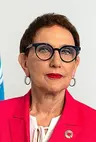

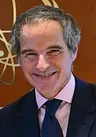

4 more outcomes Listed by current odds, highest first


Odds Summary
Lana Nusseibeh leads at 43.5% reported probability on Polymarket.
Polymarket · Last synced
Market Analysis
Grossi’s Lead Prices Veto Survival Before the UN’s Real Test
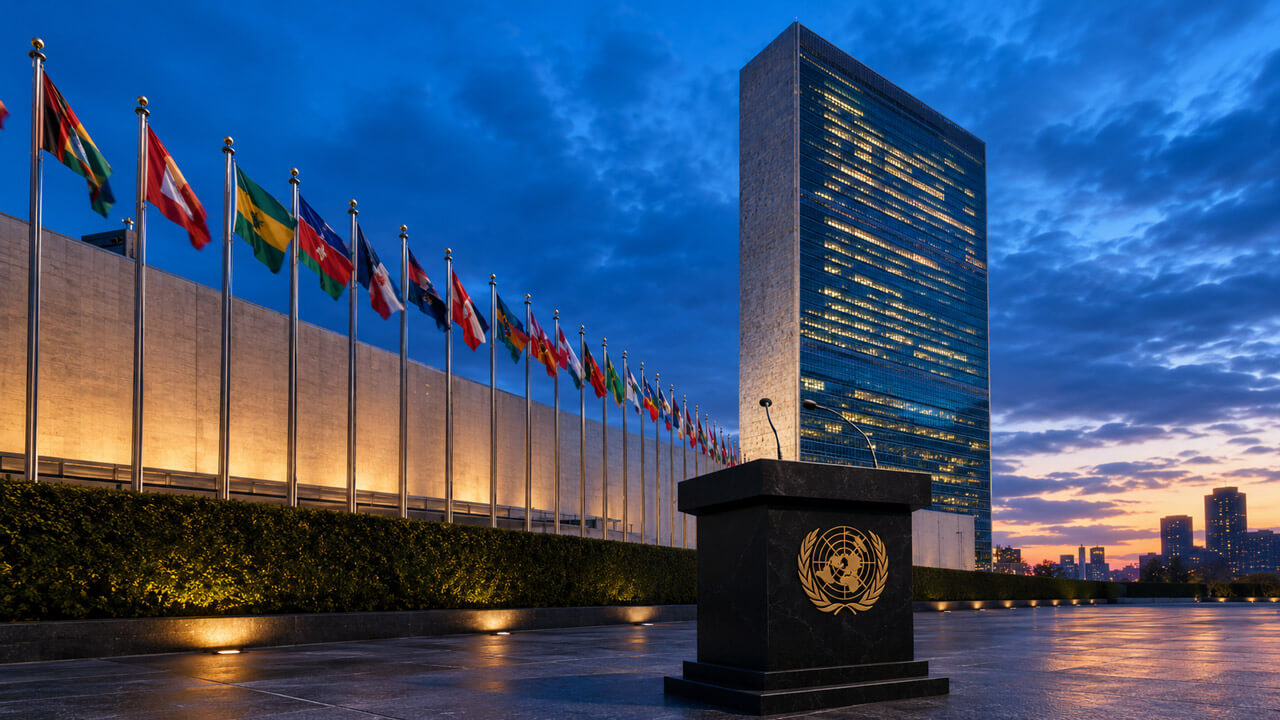
The hierarchy centers on perceived Security Council acceptability, with Rafael Grossi carrying the clearest institutional profile and Macky Sall serving as the leading alternative. That ordering depends on untested assumptions about permanent-member objections, an incomplete quoted field, and coalition durability.

Grossi’s advantage rests on perceived veto survivability
Rafael Grossi’s 49% price points to a specific market inference: his tenure as director general of the International Atomic Energy Agency gives him an established profile across governments that must manage sensitive security disputes. The decisive test is whether that visibility translates into acceptability among all five permanent Security Council members. The 193-member General Assembly appoints the secretary-general only after a Council recommendation, which requires majority support and no P5 veto.
Grossi was formally nominated by Argentina in November 2025. His IAEA term runs through December 2027, giving his candidacy institutional credibility while creating a hidden assumption about availability. The market hierarchy presumes he can campaign effectively, retain support for his current mandate, and avoid having IAEA controversies become proxies for opposition inside the Council. Those propositions have yet to face disclosed P5 vote-counting.
Sall’s second place functions as a coalition fallback
Macky Sall’s 30.6% price places him well ahead of Michelle Bachelet and Rebeca Grynspan, each at 13%. The available UN record confirms Sall is among six formally nominated candidates, although it supplies no public evidence of a decisive P5 commitment. His ranking therefore reads as a market inference that support could consolidate around him if Grossi encounters a permanent-member objection.
That interpretation contains two assumptions: Sall must remain acceptable across competing Council blocs, and the field must narrow in a way that directs support toward him. Either assumption could weaken if another candidate demonstrates broader Council backing. Conversely, diplomatic statements identifying Sall as an acceptable compromise, endorsements from withdrawing campaigns, or favorable Council straw-poll indications would give the second-place ranking firmer evidence.
The four quoted names leave coalition risk outside the hierarchy
The UN lists six formal nominees: Grossi, Sall, Bachelet, Grynspan, María Fernanda Espinosa, and Carolyn Rodrigues Birkett. The Polymarket event currently quotes only four of them. That gap matters because a candidate’s influence extends beyond winning; an unquoted campaign can divide regional or political support, survive into later rounds, or transfer backing after withdrawal.
The present ordering implicitly assumes Espinosa and Rodrigues Birkett will fail to become the main consensus option. That is unproven. A strong July presentation, new government sponsorship, or evidence of cross-regional Council support could alter that assumption. Additional nominations would create another source of coalition fragmentation. The $141,030 in volume shows meaningful engagement, while $6,030 of open interest suggests the durable exposure behind the ranking is smaller than cumulative turnover. That comparison limits how much conviction can be inferred from the current gap.
Bachelet’s sponsorship shows why nomination details can change prices
Chile withdrew its nomination of Bachelet on March 25, 2026, while UN records state that Brazil and Mexico continued to nominate her from that date. This preserved her formal candidacy while weakening the straightforward story of unified support from her home government. Her 13% price therefore depends on the inference that external sponsorship can sustain a viable diplomatic coalition.
Evidence of additional state sponsors or favorable P5 engagement would strengthen that case. Withdrawal by Brazil or Mexico, or public indications that Council members view Chile’s decision as disqualifying, would weaken it. Grynspan’s matching 13% price signals no clear market separation between the two campaigns, yet the supplied record provides insufficient evidence to attribute that parity to policy, geography, or personal support.
July moves the race from reputation to vote-counting
The candidates’ UN Town Hall on July 23, 2026 is the first scheduled event capable of changing public assessments across the full field. The more consequential stage follows in late July, when the Security Council is expected to discuss candidates behind closed doors. Public performance may shape diplomatic narratives; Council feedback tests whether those narratives survive veto politics.
Grossi’s lead would gain support from continued candidacy, favorable Council indications, and an absence of P5 objections. A disclosed permanent-member objection would directly challenge the thesis behind his position. Comparable signals favoring Sall or an unquoted nominee could reorder the field quickly. The market closes on December 31, 2026, the final day of António Guterres’s term, with the successor expected to begin January 1, 2027. The main counter-signal is therefore procedural: until Council preferences emerge, the hierarchy measures reputational plausibility more clearly than demonstrated appointability.
Sources
What Could Move the Odds?
Market-Implied Thesis
Grynspan is the likeliest named successor, but her 27.5% price implies a fragmented race rather than an established consensus.
Her lead over Grossi and Rodrigues-Birkett reflects relative momentum among listed outcomes, while most probability remains outside any single candidate.
What Could Reprice It
A Security Council recommendation—or an evident failure to secure one—is the pivotal future decision likely to reset candidate probabilities.
The UN process requires a Security Council-recommended candidate before General Assembly appointment. AP reported no candidate had all permanent-member support as of 17 October.
Where the Market May Be Weak
Residual pricing for Bachelet after her official withdrawal suggests the quote set may retain stale or low-depth positioning at the margin.
Bachelet's 1.4% Yes price persists although the UN treated her candidature as withdrawn on 21 September 2026, limiting how cleanly every quoted price maps to live contention.
Counter-Signal
Grynspan's lead can fail because no candidate had backing from all five permanent Security Council members, leaving veto risk unresolved.
The Secretary-General selection is driven by Security Council recommendation, not a public contest; a permanent member can prevent the current leader from advancing.
Market Details
- Resolution criteria
- A selection process is currently being held to choose the next Secretary-General of the United Nations, with the current term set to end on 31 December 2026.
- Platform
-


- Category
- Politics
- Scheduled deadline
- July 1, 2027, 3:59 AM UTC
- Market rules summary
- Multi-outcome Polymarket event. Each listed option is represented by its Yes price on the underlying market. View full rules
Frequently Asked Questions
What are the current Next Secretary-General of the United Nations odds?
Polymarket reports Next Secretary-General of the United Nations odds with Lana Nusseibeh at 43.5%, Rebeca Grynspan at 17%, Olara Otunnu at 15.4%, and Rafael Grossi at 15.3%. These probabilities are market-implied and can change as liquidity and trading activity update. The latest market snapshot includes $239.84K volume, $69.84K liquidity, and $13.75K open interest. CryptoSlate last synced this market data at Oct 24, 2026, 11:48 UTC.
What could move the Next Secretary-General of the United Nations prediction market odds?
Grynspan is the likeliest named successor, but her 27.5% price implies a fragmented race rather than an established consensus. Her lead over Grossi and Rodrigues-Birkett reflects relative momentum among listed outcomes, while most probability remains outside any single candidate. Catalysts to watch include Security Council recommendation or failure to reach one, Security Council recommendation process, and Further candidate withdrawals or endorsements.
How does the Next Secretary-General of the United Nations prediction market resolve?
A selection process is currently being held to choose the next Secretary-General of the United Nations, with the current term set to end on 31 December 2026. Multi-outcome Polymarket event. Each listed option is represented by its Yes price on the underlying market.
Related Markets
 Which party will win Mississippi’s 2026 Senate election?

 Which party will win New Hampshire’s 2026 Senate election?


 Which party will win Nevada’s 2026 governor election?